Skip to content

Glossary

Paraphrasing: rebuilding an idea in your own sentence, with the citation kept

Paraphrasing restates a source’s point in your own sentence structure and vocabulary, at roughly the same length, with the citation kept. Done properly it requires understanding the idea well enough to rebuild it from nothing — which is why the reliable method is to close the source before you write the sentence.

Why it matters when you are writing

The test is not whether the words differ but whether the sentence is yours. Read the passage until you can state its point aloud, put the source out of sight, write your version, then reopen the source and check two things: that you have not distorted the claim, and that no distinctive phrase has survived intact. Anything that survives should be in quotation marks or rewritten.

A paraphrase always keeps its citation. The idea is still borrowed; only the expression is yours. Dropping the citation because you rewrote the sentence is one of the most common integrity findings, and it is entirely avoidable — the citation goes in at the same moment as the paraphrase, not in a later pass.

Quote instead when the wording itself is the evidence: a definition you will interrogate, a phrase whose ambiguity is the point, a formulation so precise that rewording it would change what it claims. Paraphrase in every other case, because a page of quotations reads as a reading list rather than an argument, and reviewers say so.
IN PRACTICE

A real paraphrase, not a synonym swap

Before

Source: “Policy documents hedge most heavily in precisely those provisions where enforcement capacity is weakest.”

After

Hardin (2019) found that the vaguest language clusters where regulators have the least ability to act — hedging tracks enforcement capacity rather than legal complexity.

OFTEN CONFUSED WITH

What Paraphrasing is not

Summarizing
A summary compresses a long passage into its main point; a paraphrase restates a short passage at roughly the same length.
Patchwriting
Patchwriting keeps the source’s sentence frame and substitutes synonyms; a paraphrase rebuilds the sentence from the idea.
Quoting
A quotation reproduces the exact words inside quotation marks; a paraphrase carries the meaning in your own words, and both need a citation.

Questions about paraphrasing

Does a paraphrase need a citation?

Yes, every time. The wording is yours but the idea is not, and an uncited paraphrase is one of the most common forms of plagiarism found in student work.

How different does a paraphrase have to be?

Different in structure, not only in vocabulary. If a reader could line your sentence up against the original clause by clause, you have patchwritten rather than paraphrased.

Do I need a page number for a paraphrase?

APA recommends one and MLA requires one for paginated sources. Beyond the rule, it is a courtesy: it lets a reader check your reading against the passage you actually used.

Should I paraphrase or quote?

Quote when the exact wording is the evidence. Paraphrase everywhere else — it shows you understood the source rather than merely located it.

Write it once.
Prove you wrote it.

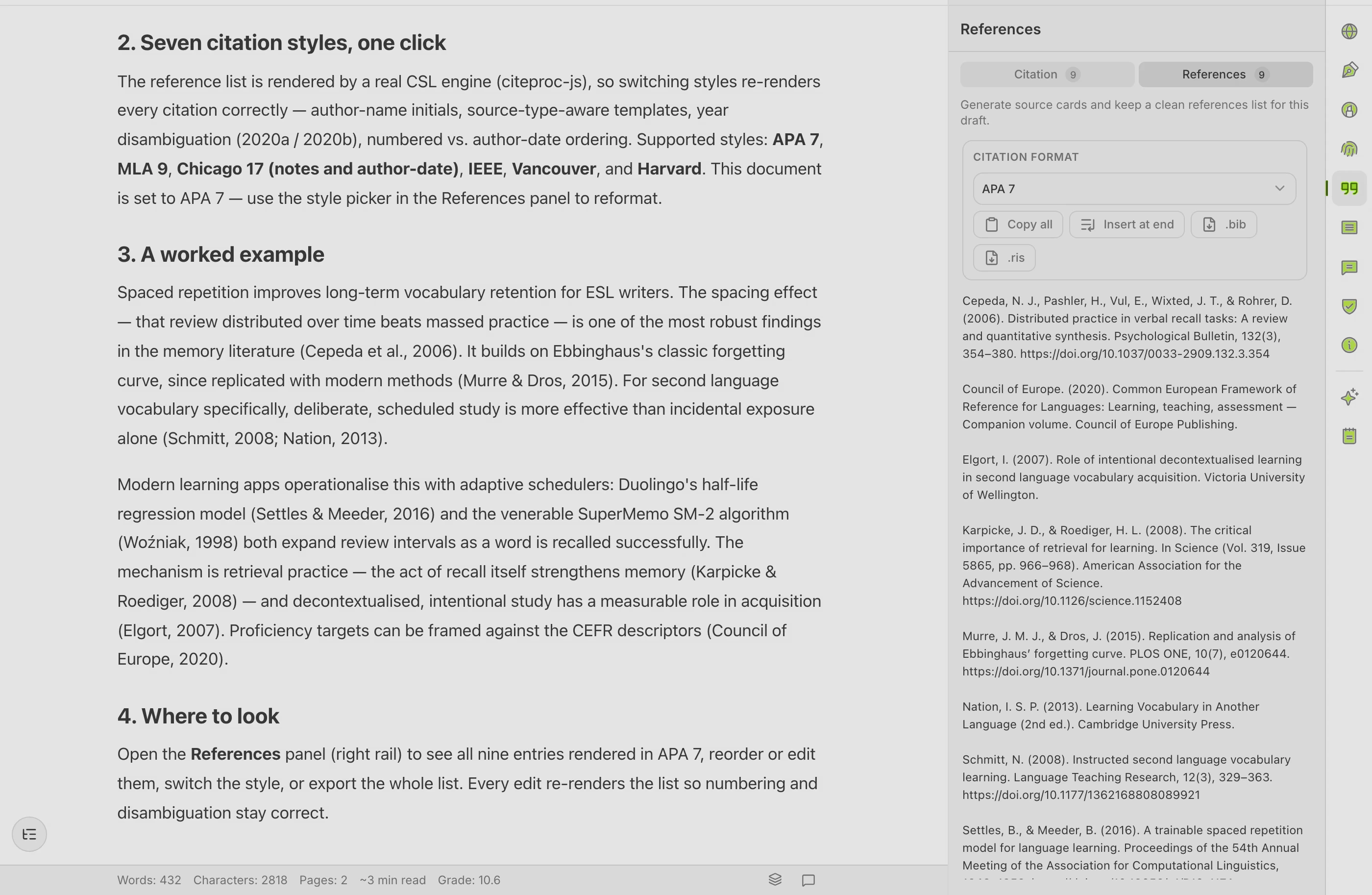
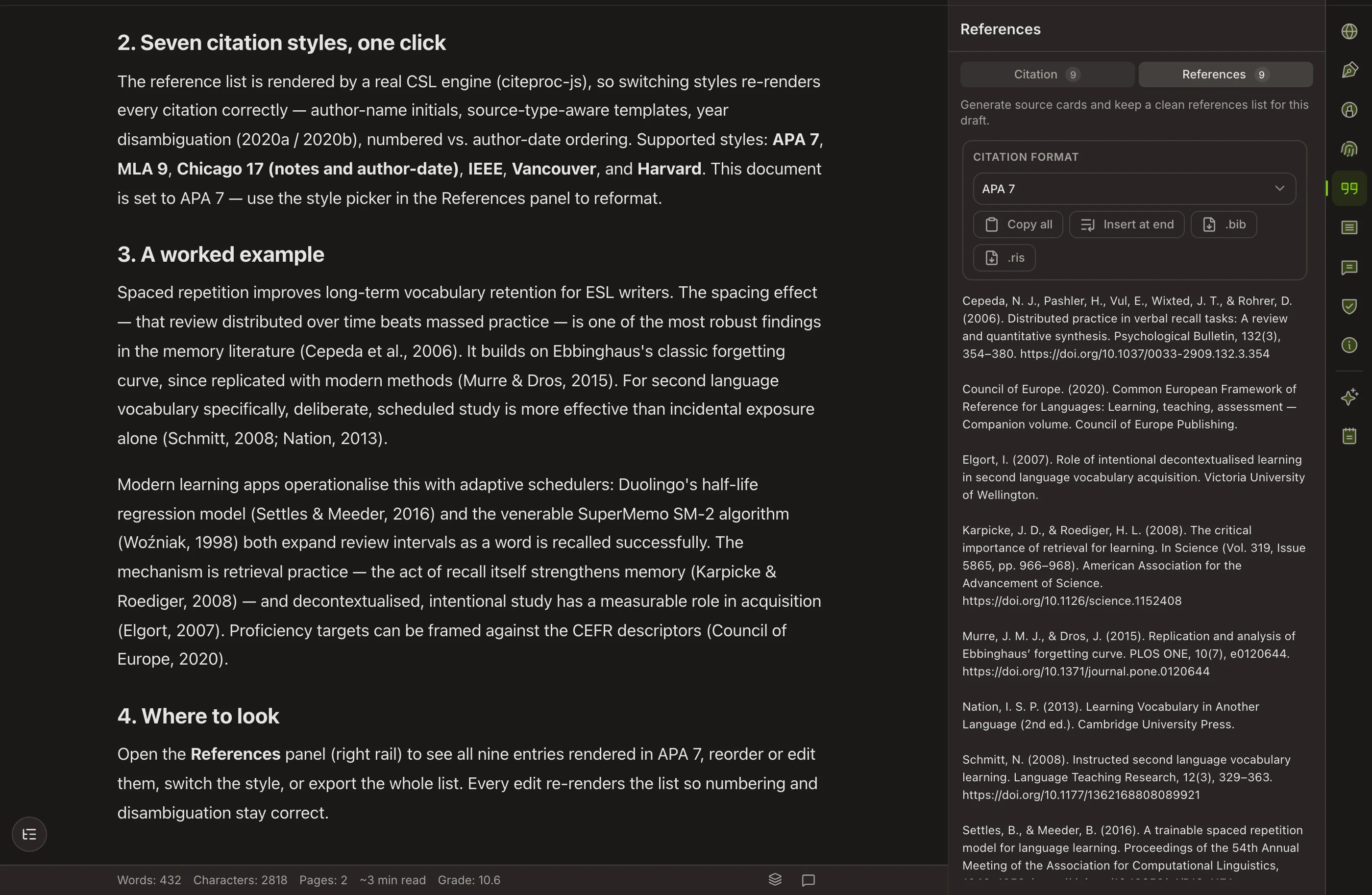
Copyeditor is an academic writing workspace — structured drafting, citations that build their own bibliography, and a signed record of how your document came together.

Apply for beta

*Beta opens this season — starting with students and researchers.

The Copyeditor writing workspace