Skip to content

Free tool

Analyze transition density and cohesive signposting across paragraphs

Maps cohesive linking devices across four rhetorical categories to ensure smooth logical transitions between academic arguments.

Runs entirely in your browser. Nothing you paste is uploaded, stored, or sent anywhere.

How it works

Academic coherence relies on signposting language that guides the reader through logical turns. This tool categorizes transitions into four functional groups: Additive (“furthermore”, “in addition”), Adversative/Contrast (“however”, “nonetheless”), Causal/Consequential (“therefore”, “consequently”), and Sequential/Structuring (“subsequently”, “primarily”).

The checker calculates your overall transition density (target: 2–4 transitions per 100 words) and flags paragraphs that lack connective devices.

It also highlights overused transitional crutches (e.g., using “moreover” four times in two pages) and suggests category-appropriate alternatives.

The analysis executes entirely in your browser with no network transmission.

Why it matters for academic writing

Reviewers often comment that a paper “lacks flow” or “feels disjointed”. Explicit transitional signposting establishes clear relational logic between premises, methodology, and conclusions.
Questions about the transition words checker

How many transition words should an academic paper have?

A healthy benchmark is 2 to 4 transitional markers per 100 words. Fewer than 1.5 indicates abrupt, disjointed prose; more than 6 feels padded and repetitive.

What are the four main types of academic transitions?

1) Additive (adding evidence); 2) Adversative (contrasting or limiting); 3) Causal (explaining outcomes/consequences); 4) Sequential (ordering steps or arguments).

Is it bad to start a sentence with “However” or “Therefore”?

No, provided they are followed by a comma. However, starting every single sentence with a transition creates a stilted, formulaic cadence.

Is my draft confidential?

Yes. The tool runs locally in your browser and never transmits your manuscript.

Embed this transition words checker on your academic blog or website

Free for universities, writing centers, and academic blogs. Copy and paste the HTML snippet below:

These are the small tools
Copyeditor is the workspace

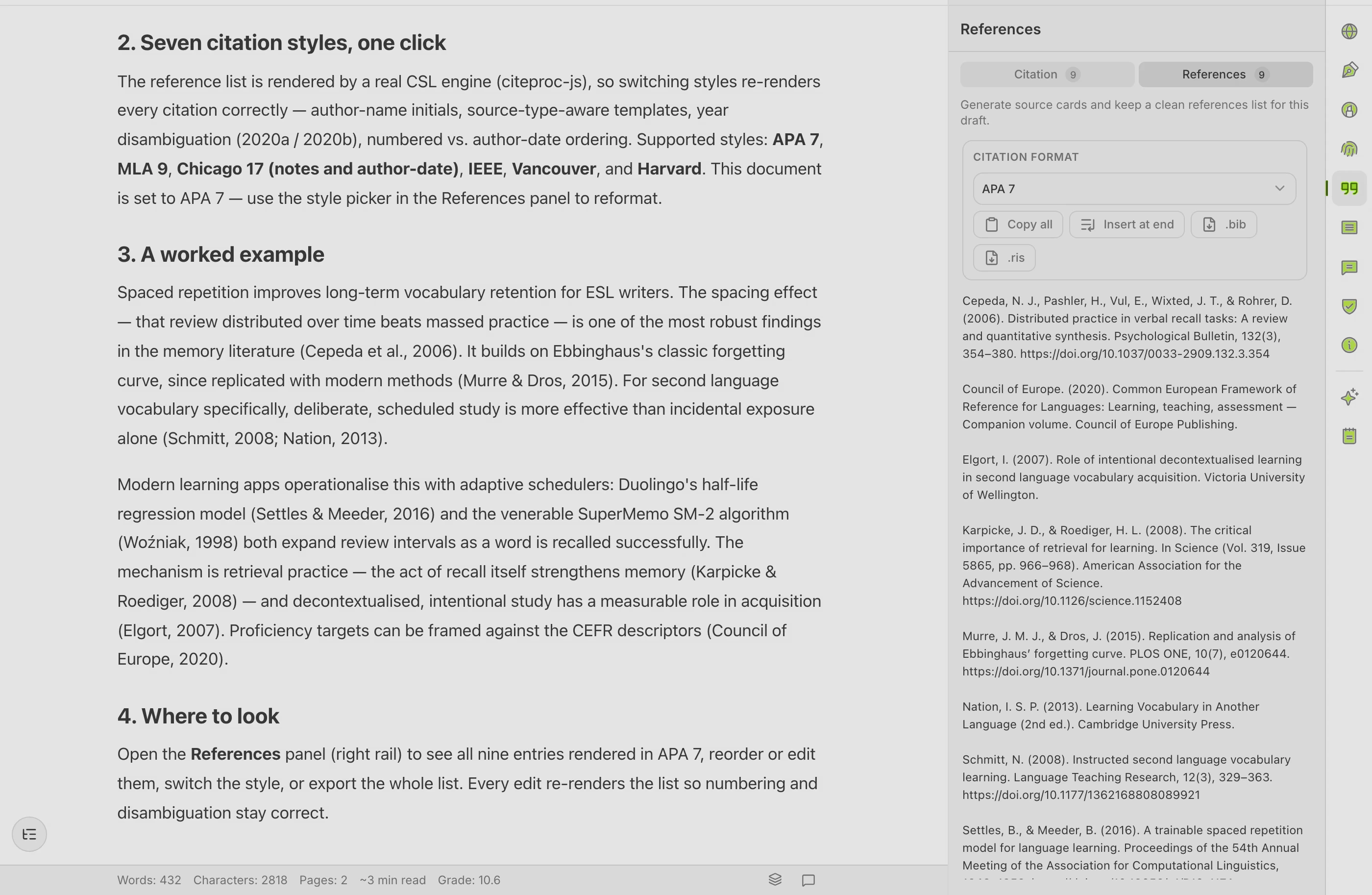
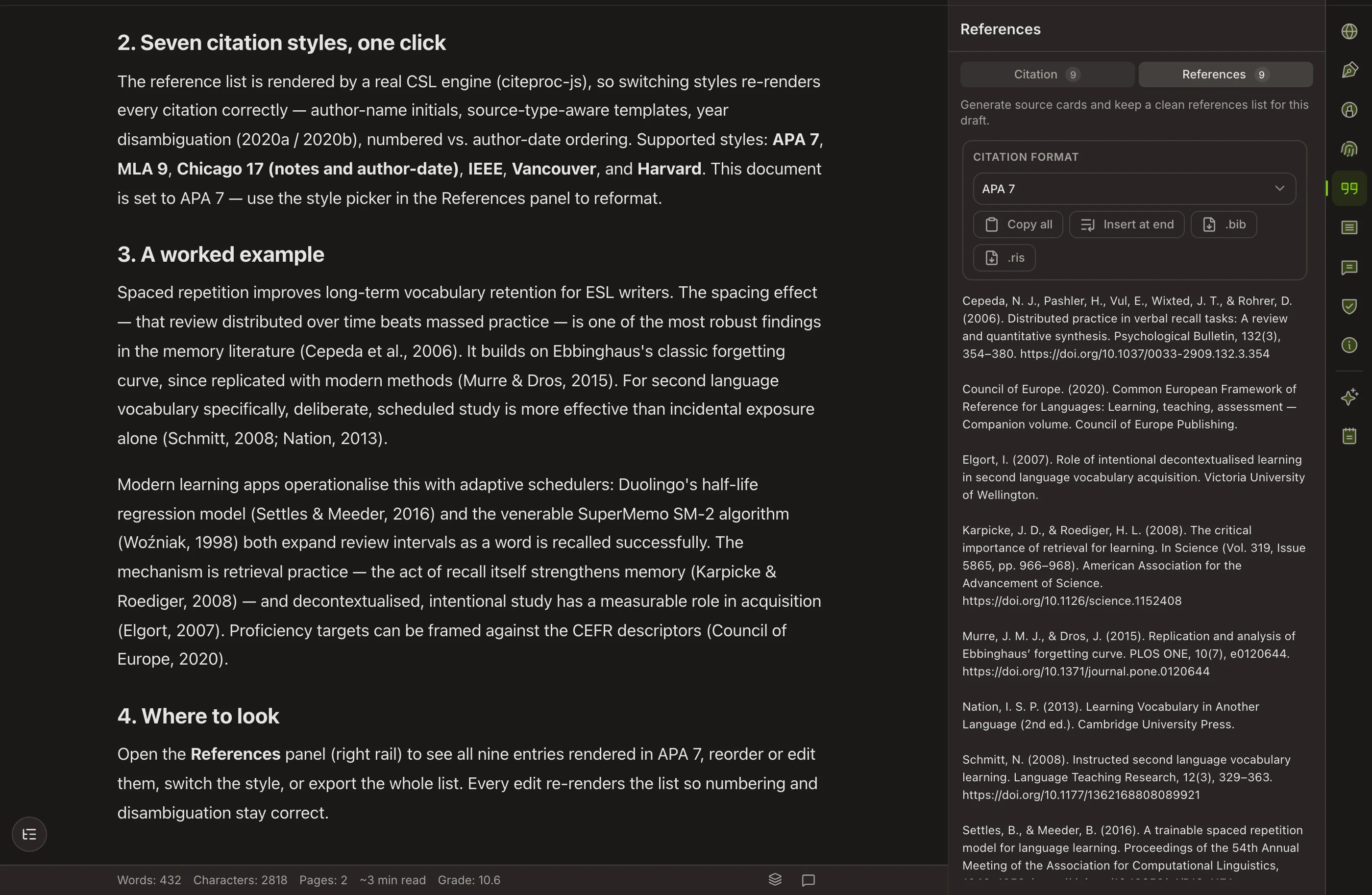
Structured drafting, citations that build their own bibliography, academic paraphrase and export — in one document. In beta; apply and we’ll reach out as spots open.

Apply for beta

*Beta opens this season — starting with students and researchers.

The Copyeditor writing workspace