Skip to content

Free tool

Find run-on sentences, comma splices, and tangled clauses

Detects comma splices, fused independent clauses, and excessively stacked sentences that obscure academic meaning.

Runs entirely in your browser. Nothing you paste is uploaded, stored, or sent anywhere.

How it works

Academic drafts frequently suffer from two grammatical structural errors: comma splices (joining two independent clauses with only a comma, such as “The sample was small, however the effect was significant”) and fused run-ons (joining clauses without punctuation or coordinating conjunctions).

The tool scans sentence boundaries for conjunctive adverbs preceded by commas instead of semicolons, pronoun-verb clause starts following uncoordinated commas, and sentences exceeding 35 words with high clause density.

For each issue detected, the tool explains the structural cause and recommends punctuation repairs: inserting a semicolon, adding a coordinating conjunction, or splitting the thought into two distinct sentences.

All structural parsing runs locally in your browser.

Why it matters for academic writing

Run-on sentences and comma splices force readers to re-read complex academic arguments multiple times. Clean sentence boundaries ensure reviewers grasp your findings on the first read.
Questions about the run-on sentence checker

What is the difference between a run-on and a long sentence?

A long sentence can be grammatically flawless if clauses are properly subordinated. A run-on is a grammatical error where two independent clauses are fused without proper punctuation or conjunctions.

How do I fix a comma splice?

You can fix a comma splice in three ways: 1) Replace the comma with a period; 2) Replace the comma with a semicolon; 3) Add a coordinating conjunction (for, and, nor, but, or, yet, so) after the comma.

Why does “however” after a comma create an error?

“However” is a conjunctive adverb, not a coordinating conjunction. When connecting two independent clauses, it requires a semicolon before it and a comma after it (“…results were positive; however, the sample…”).

Is my draft stored anywhere?

No. All analysis runs directly inside your browser window with complete privacy.

Embed this run-on sentence checker on your academic blog or website

Free for universities, writing centers, and academic blogs. Copy and paste the HTML snippet below:

These are the small tools
Copyeditor is the workspace

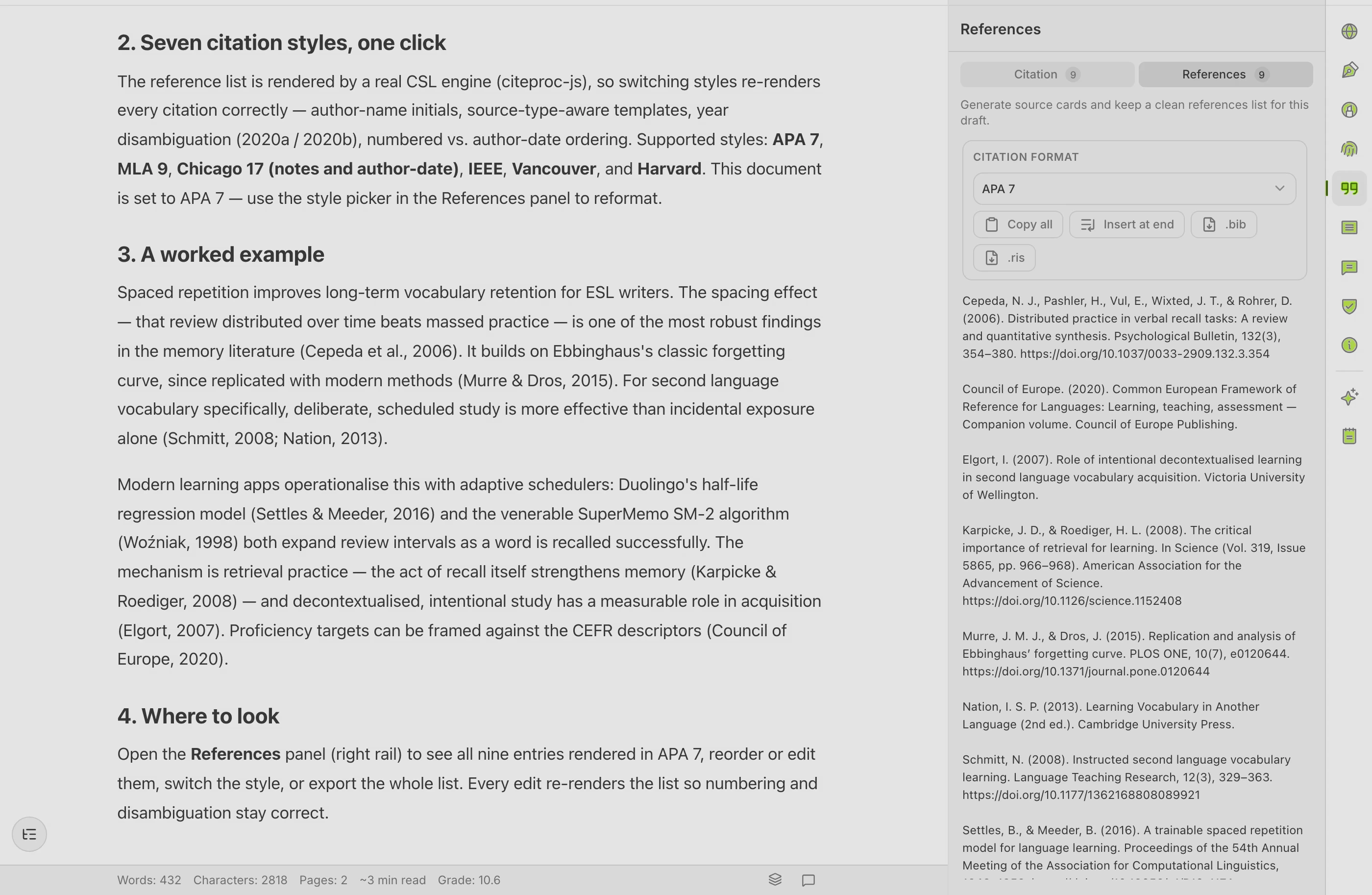
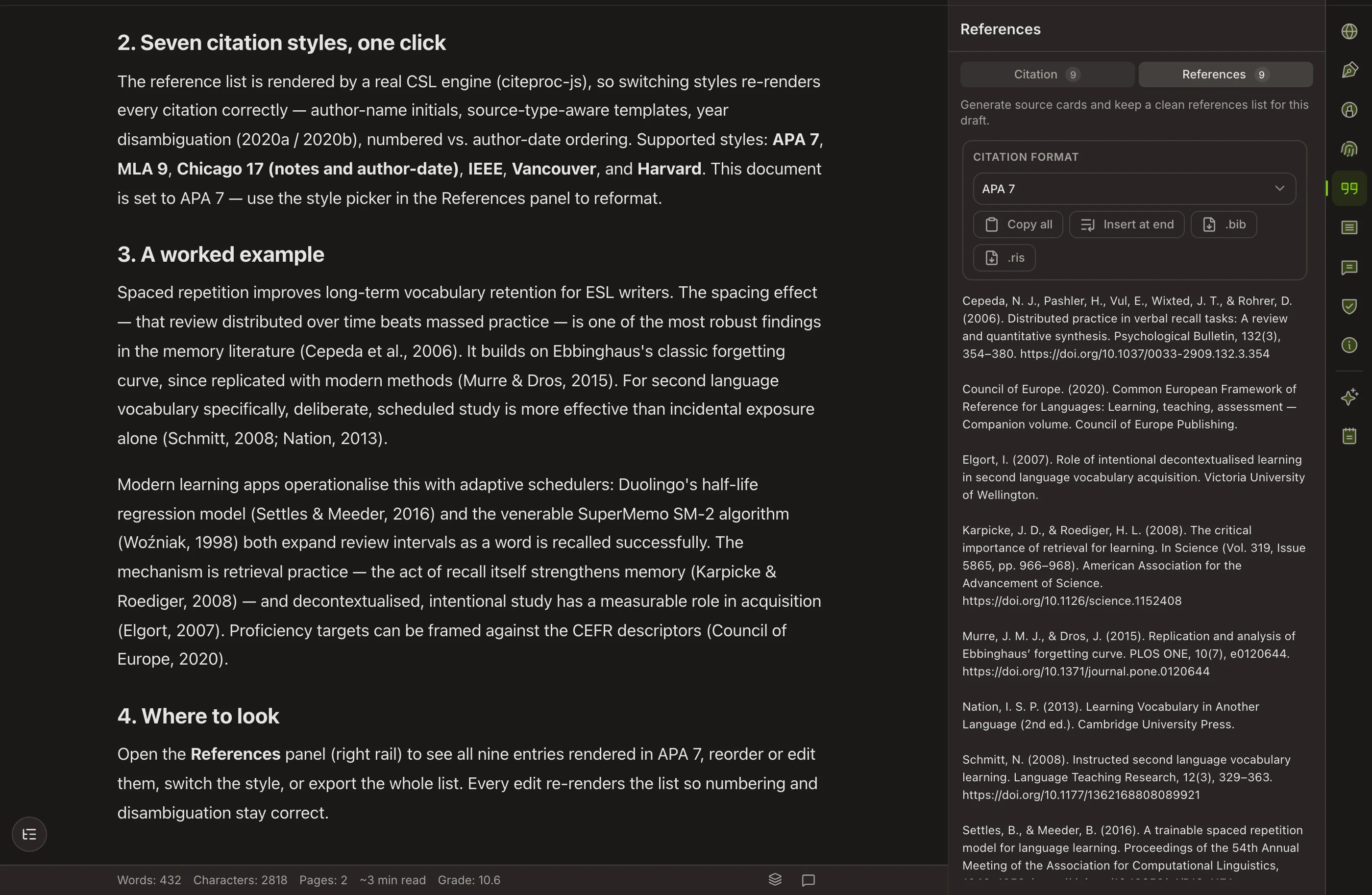
Structured drafting, citations that build their own bibliography, academic paraphrase and export — in one document. In beta; apply and we’ll reach out as spots open.

Apply for beta

*Beta opens this season — starting with students and researchers.

The Copyeditor writing workspace