Skip to content

Free tool

Analyze sentence burstiness and repetitive syntax that trigger AI detectors

Explains why authentic research drafts get falsely flagged by Turnitin or GPTZero and highlights low-burstiness sentence patterns.

Runs entirely in your browser. Nothing you paste is uploaded, stored, or sent anywhere.

How it works

AI detectors (such as Turnitin, GPTZero, and CopyLeaks) do not actually detect “AI”; they measure statistical perplexity (word choice predictability) and burstiness (variation in sentence length and structure).

Academic prose naturally has lower perplexity because researchers follow strict disciplinary conventions, standard formulas, and passive verbs. When combined with uniform sentence lengths (e.g., consecutive 18–22 word sentences), detectors generate false positives.

This tool calculates your manuscript’s Burstiness Index (sentence length standard deviation), tracks repetitive sentence starters (such as starting 4+ sentences in a row with “The…” or “This…”), and detects generic transitional formulas.

It provides actionable guidance to vary your sentence architecture and eliminate the robotic cadence that trips detector thresholds.

Why it matters for academic writing

False-positive AI allegations in academia cause severe stress, delayed grades, and contested submissions. Understanding the structural triggers empowers you to defend your original writing and adjust cadence before submission.
Questions about the why flagged as ai? analyzer

Why do AI detectors falsely flag ESL and academic writers?

Academic writers and ESL scholars deliberately use formal, standardized phrases and consistent sentence lengths. AI detectors misinterpret this standard academic regularity as machine generation.

What is “burstiness” in writing?

Burstiness measures variance in sentence length and rhythm. Humans naturally alternate between short punchy sentences and long complex clauses; AI text tends to maintain uniform sentence lengths.

How can I lower the AI probability of my human paper?

Vary sentence lengths dramatically (mix 8-word and 32-word sentences), diversify sentence openers, use active voice for your own actions, and incorporate specific empirical citations.

Does this tool send my paper to an AI detector?

No. The burstiness and syntax analysis runs entirely client-side on your device without pinging any third-party detector APIs.

Embed this why flagged as ai? analyzer on your academic blog or website

Free for universities, writing centers, and academic blogs. Copy and paste the HTML snippet below:

These are the small tools
Copyeditor is the workspace

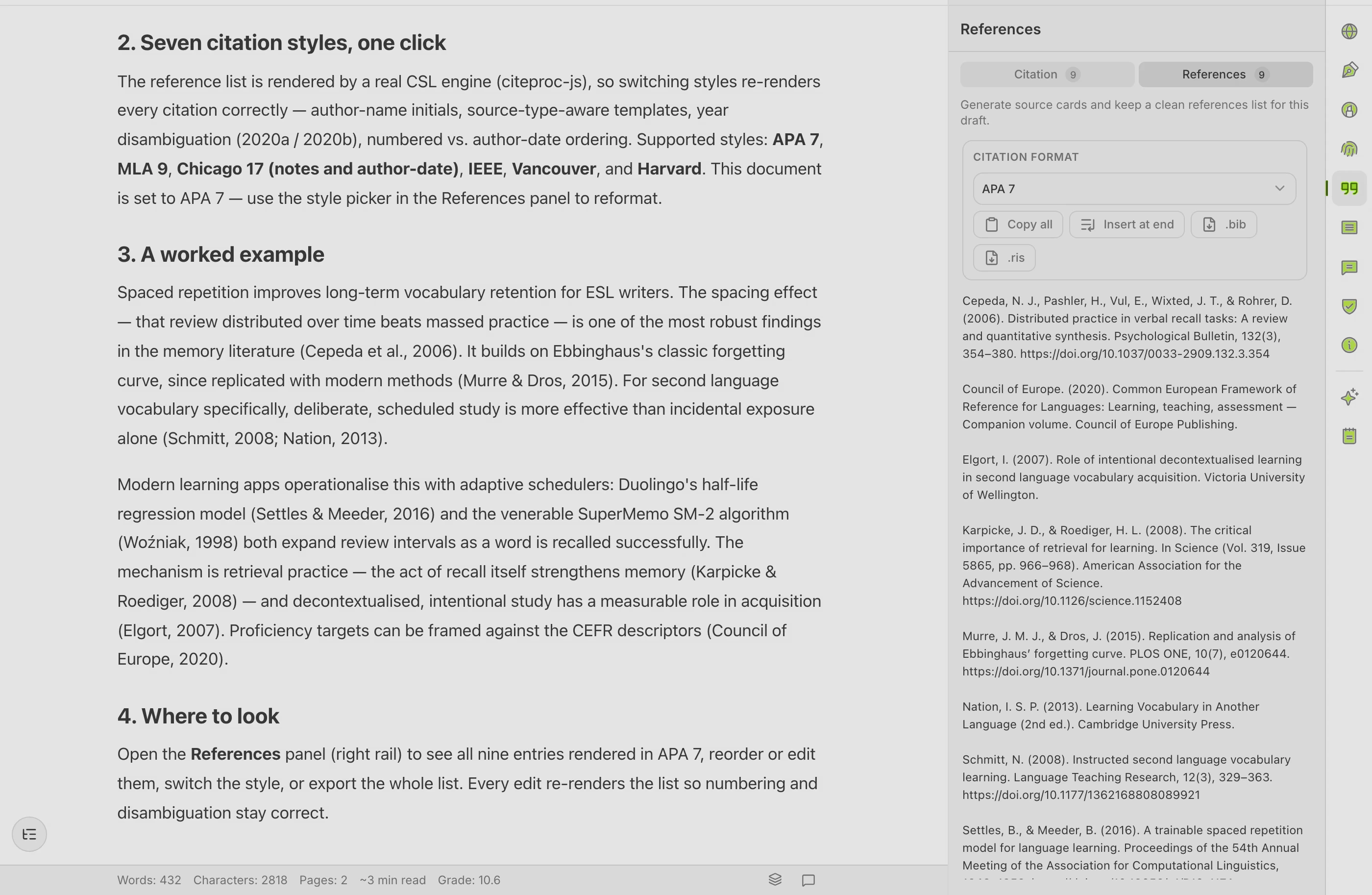
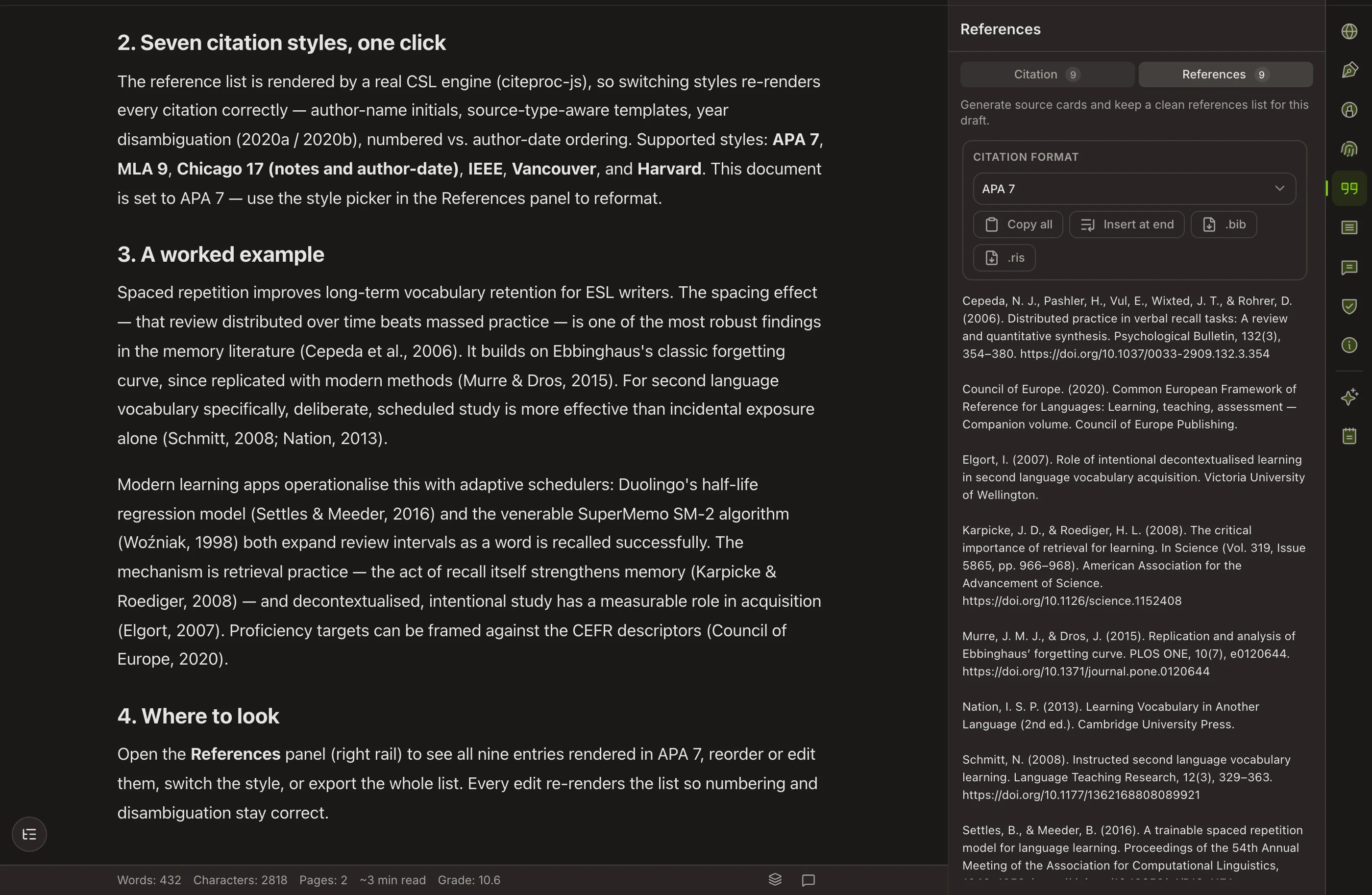
Structured drafting, citations that build their own bibliography, academic paraphrase and export — in one document. In beta; apply and we’ll reach out as spots open.

Apply for beta

*Beta opens this season — starting with students and researchers.

The Copyeditor writing workspace