Why it matters when you are writing
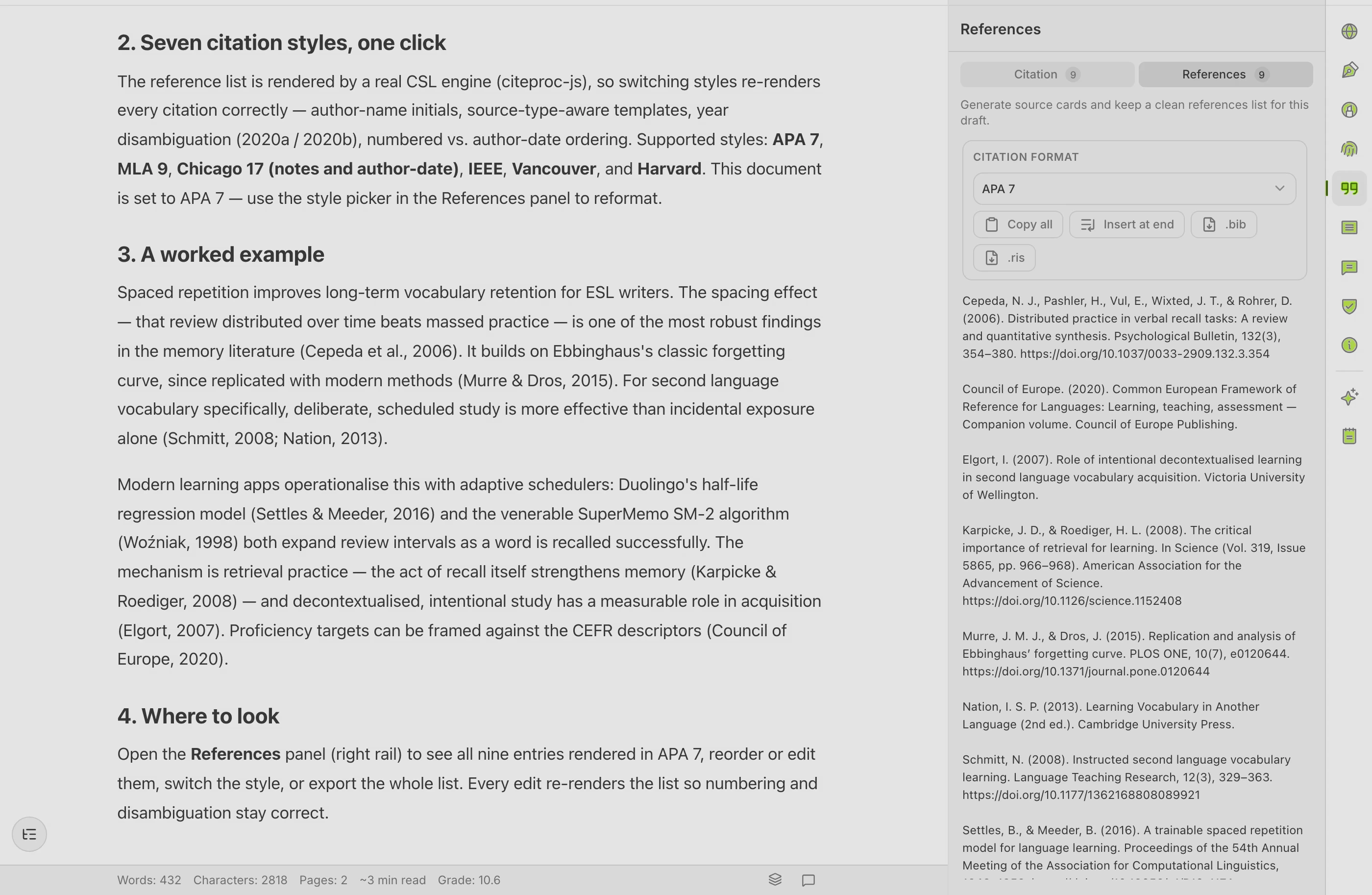
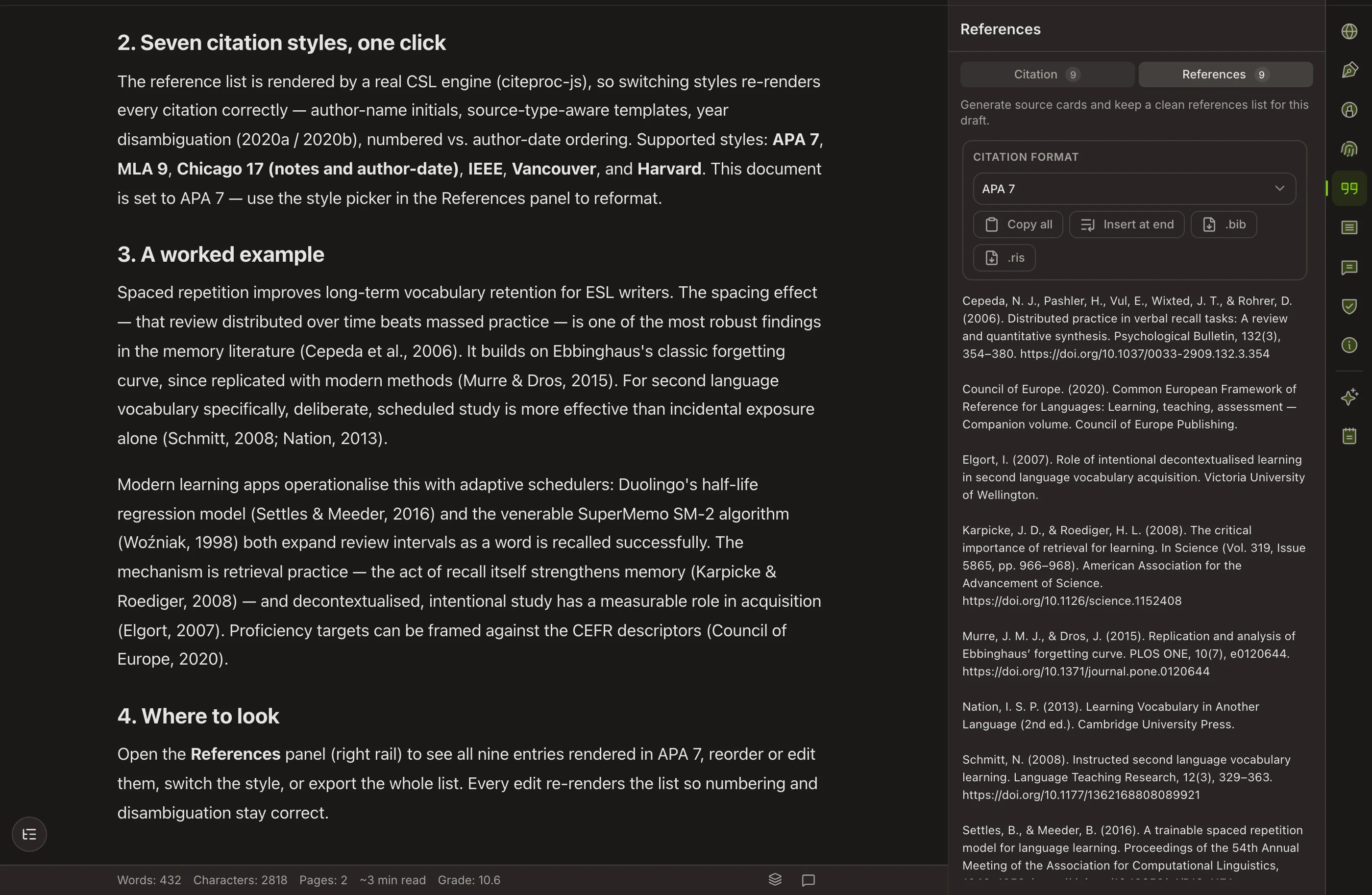
The in-text citation and the reference list are two halves of one mechanism. The marker in your sentence is deliberately short so it does not interrupt the reading; the full entry at the back carries everything a reader needs to find the source. If a marker has no matching entry, or an entry is never pointed to, the mechanism is broken and a marker will notice.
Where you put the citation changes what it covers. Placed at the end of a sentence, it attributes that sentence. Placed at the end of a paragraph, it leaves the earlier sentences ambiguous — a common reason supervisors write “source?” in the margin halfway down a page. When a paragraph draws on one source throughout, name the author in the first sentence and keep the thread visible, rather than hoping one closing parenthesis reaches backward.
You also choose between parenthetical and narrative form, and the choice is rhetorical. A parenthetical citation keeps the finding in the foreground. A narrative citation puts the researcher in the subject position, which is what you want when the paper is about who claimed what, or when you are setting one author against another.