Skip to content

Glossary

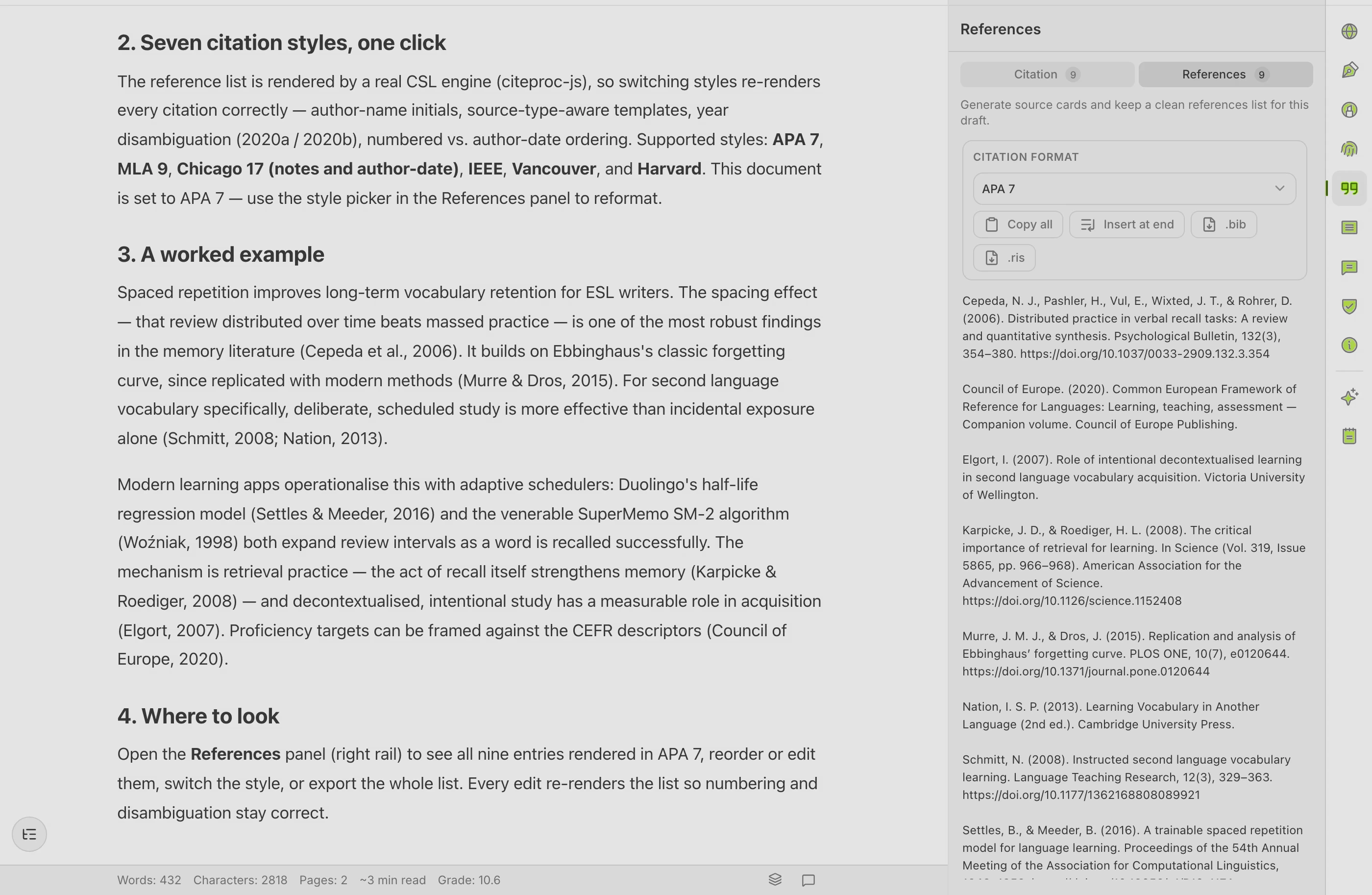
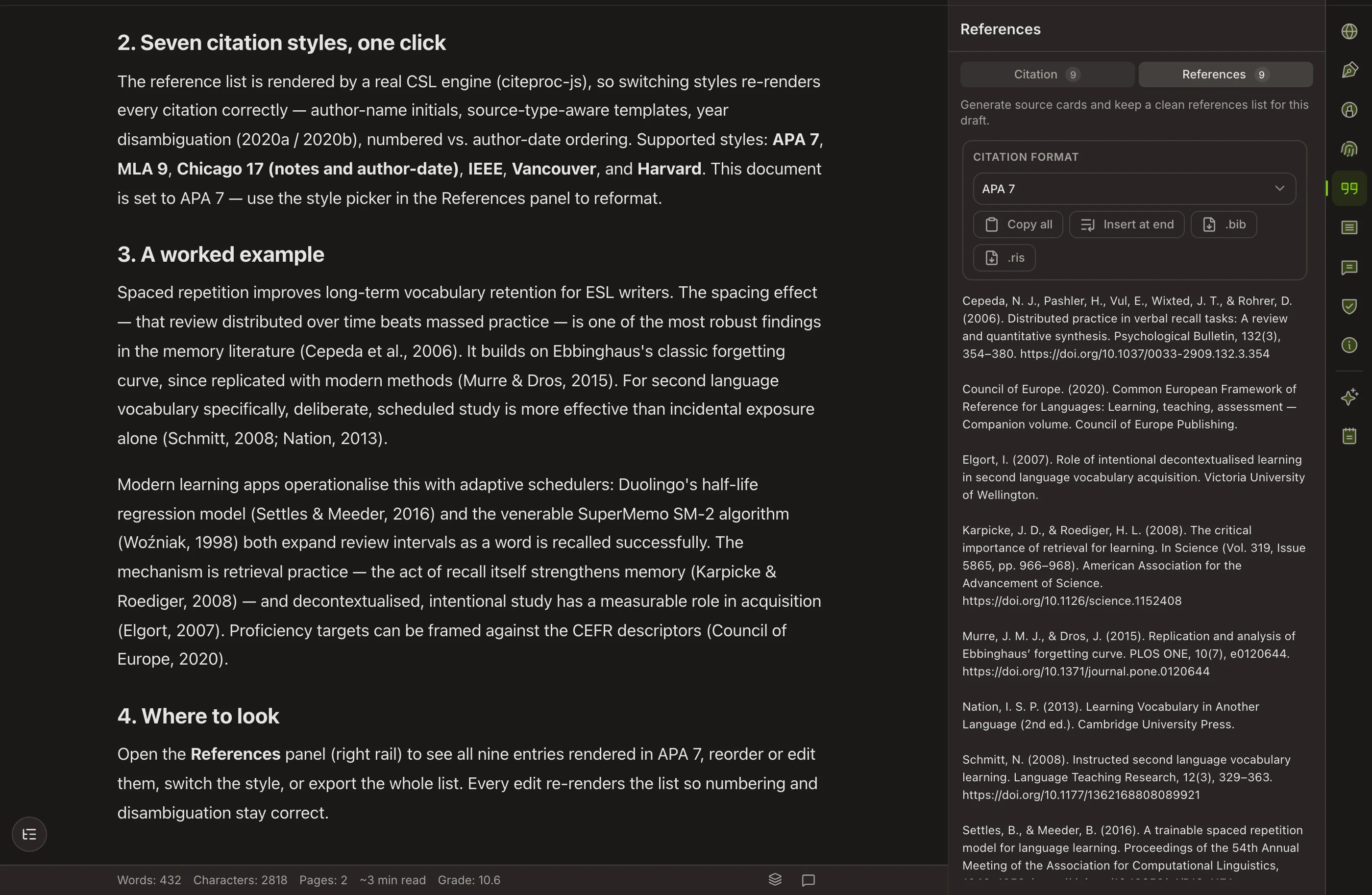
Ibid.: the repeated-source shortcut, and why Chicago now discourages it

Short for the Latin ibidem, “in the same place,” ibid. replaces a footnote that would otherwise repeat the source cited immediately above it, with a page number added when the page differs. Chicago now prefers a shortened citation instead, and author–date styles such as APA never use it at all.

Why it matters when you are writing

Ibid. only ever refers to the note directly preceding it. That makes it fragile during revision: move a paragraph, insert a note, or let a co-author drop a citation in between, and every following ibid. now points at the wrong source without any visible sign that anything broke. This is the practical reason the seventeenth edition of Chicago recommends the shortened form — author surname, short title, page — over ibid. in most cases.

When you do use it, capitalize it at the start of a note and add a locator only when the page changes. “Ibid.” alone means the same source and the same page; “Ibid., 91” means the same source at a different page. It does not carry across a chapter break, and most publishers will not let it stand as the first note of a chapter.

Author–date systems have no equivalent and need none, because a repeated citation is already only a surname and a year. If you find yourself wanting an ibid. in an APA or Harvard paper, what you actually want is to name the author once in the sentence and let the reader carry the attribution forward.
IN PRACTICE

Chicago notes: ibid. versus the now-preferred shortened form

Before

12. Hardin, Reading the Archive, 88. · 13. Ibid., 91.

After

12. Hardin, Reading the Archive, 88. · 13. Hardin, Reading the Archive, 91.

OFTEN CONFUSED WITH

What Ibid. is not

Op. cit.
Ibid. points to the note immediately above; op. cit. points to a work cited earlier with other notes in between — and both are now largely replaced by shortened citations.
Idem
Idem means the same author, not the same work, and is used when consecutive notes cite different works by one writer.
Shortened citation
A shortened citation names the author and a short title, so it stays correct no matter how the surrounding notes are rearranged.

Questions about ibid.

Is “ibid.” still acceptable?

Yes, and plenty of journals still print it. Chicago 17 simply recommends the shortened citation as the default because it survives editing. Follow your target journal’s instructions over general preference.

Does ibid. need a page number?

Only if the page differs from the previous note. “Ibid.” alone means the same source and the same page.

Can I use ibid. in APA?

No. APA is an author–date style with no note-based citation chain, so a repeated source is simply cited again as (Hardin, 2019).

Write it once.
Prove you wrote it.

Copyeditor is an academic writing workspace — structured drafting, citations that build their own bibliography, and a signed record of how your document came together.

Apply for beta

*Beta opens this season — starting with students and researchers.

The Copyeditor writing workspace