Skip to content

Free tool

Check your abstract against the limit before you submit

Counts your abstract against a limit you set and shows how the words are distributed across its structural moves.

Runs entirely in your browser. Nothing you paste is uploaded, stored, or sent anywhere.

How it works

You enter the limit your journal or conference imposes — commonly 150, 250, or 300 words — and paste the abstract. The counter shows words used, words remaining, and the overage if there is one, using the same whitespace-based counting a word processor uses.

A second view splits the abstract by sentence and estimates which structural move each sentence performs — context, objective, method, result, or conclusion — from the cue words and verb tense it contains. Sentences beginning with “we examined” or “this study aims” read as objective; past-tense sentences with numbers read as results. The classification is a heuristic and will misplace some sentences, so it is offered as a rough balance check, not a verdict.

The point of that breakdown is proportion. An abstract that spends half its words on background and two sentences on findings is over-long in a specific, fixable place, and seeing the split tells you which paragraph to cut rather than sending you trimming adjectives everywhere.

Counting and classification both run in your browser and update as you edit.

Why it matters for academic writing

Submission systems reject over-length abstracts outright, and the cut you make at the deadline is usually the wrong one because you cut whatever is easiest to reach. Knowing which move is consuming the words lets you take them from the background, which almost always has some to spare.
Questions about the abstract length checker

Does my abstract leave my computer?

No. Both the count and the sentence breakdown run in your browser; nothing you paste is uploaded or stored.

What is a typical abstract word limit?

Most journals set between 150 and 300 words, with 250 the most common cap, and conference calls vary more widely. Always take the number from the venue’s own guidelines rather than from a general figure.

How accurate is the section breakdown?

It is a heuristic based on cue words and tense, so expect it to misclassify some sentences, particularly in unstructured humanities abstracts. Use it to see rough proportions, not as a label you have to agree with.

Do keywords count toward the abstract limit?

Usually not — most journals count keywords separately — but a few include them. Check the author guidelines, and paste only the text that counts.

These are the small tools
Copyeditor is the workspace

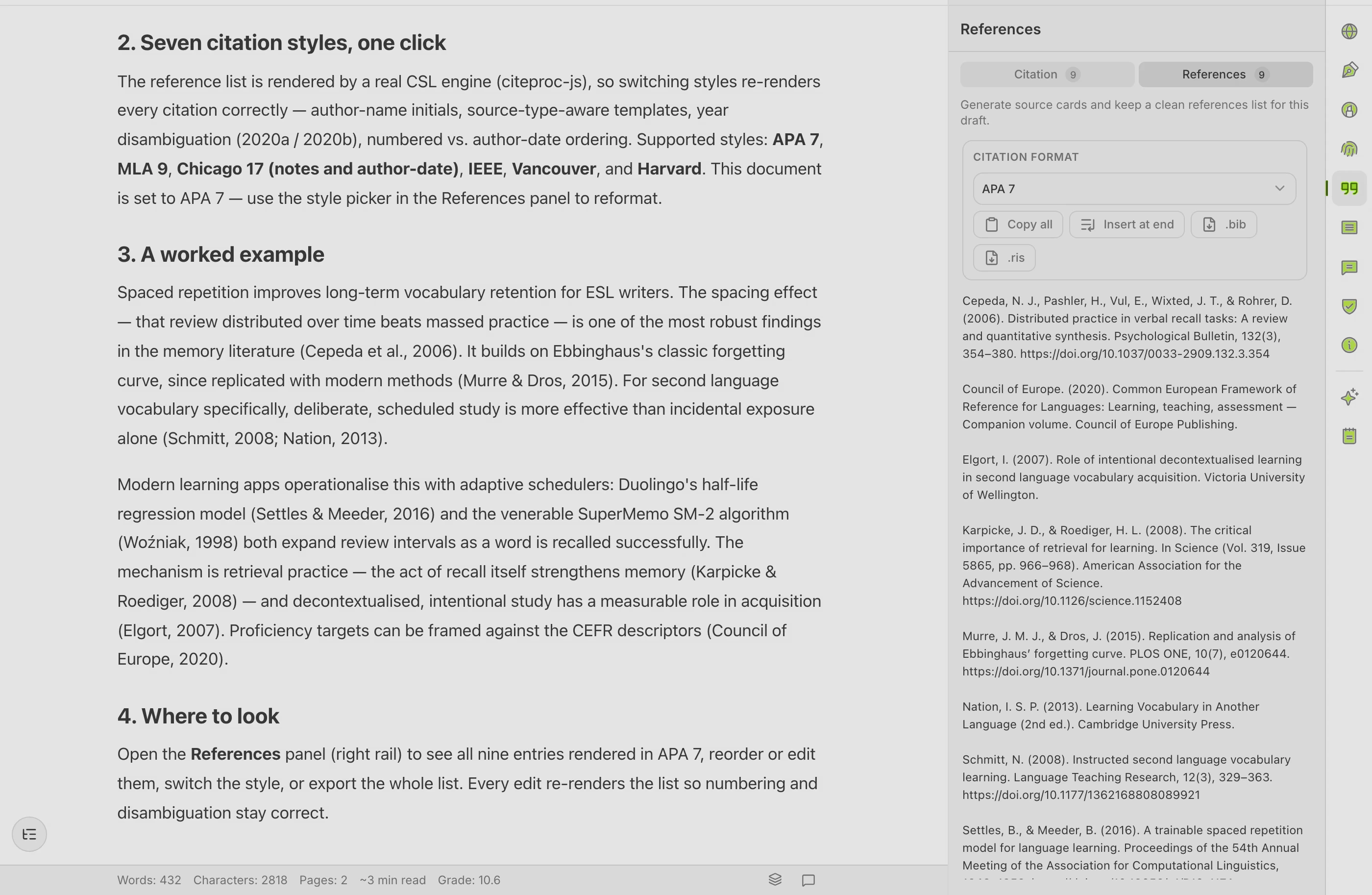
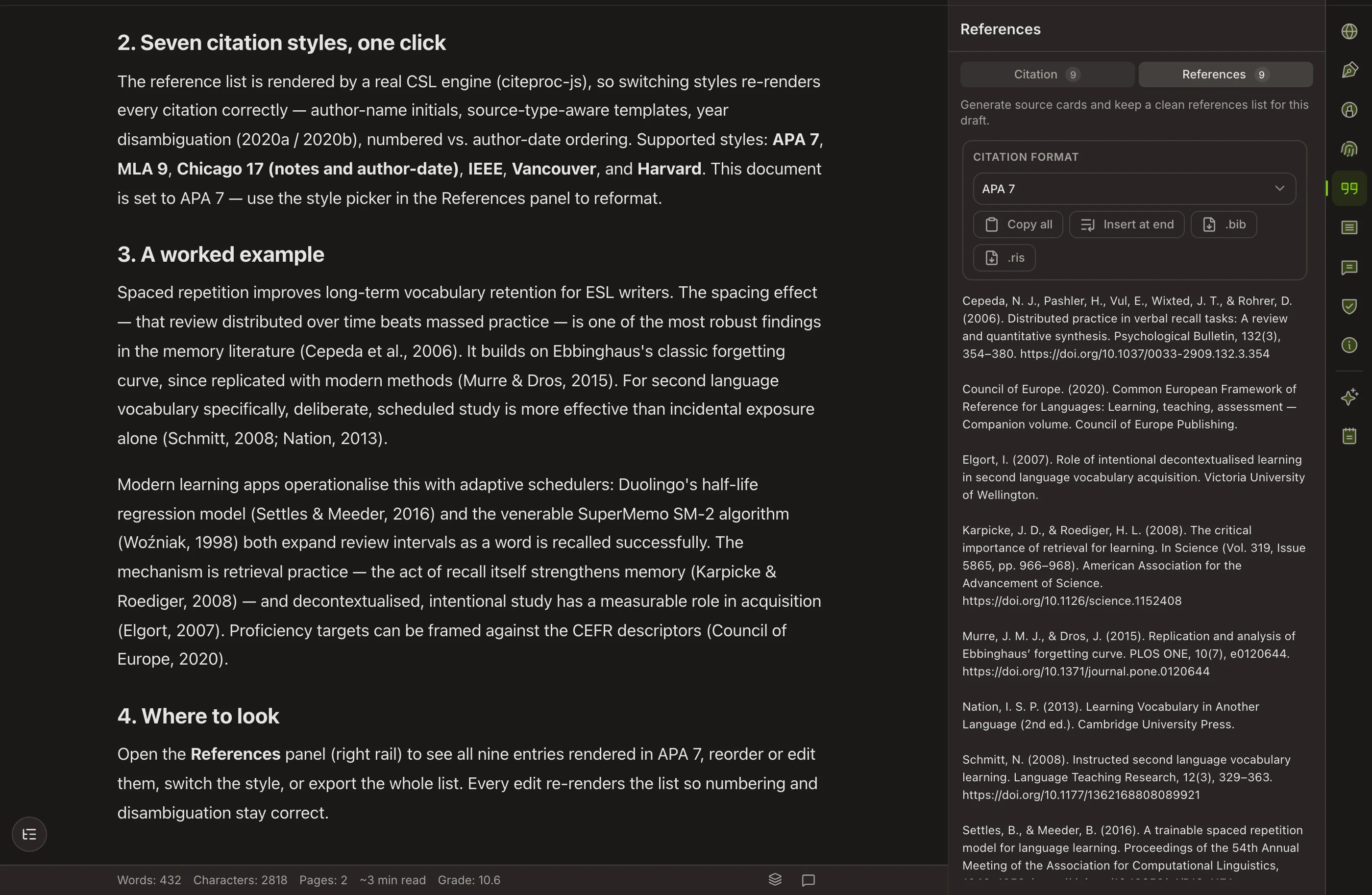
Structured drafting, citations that build their own bibliography, academic paraphrase and export — in one document. In beta; apply and we’ll reach out as spots open.

Apply for beta

*Beta opens this season — starting with students and researchers.

The Copyeditor writing workspace