Why it matters when you are writing
Secondary sources do real work early in a project. They tell you who the major voices are, which findings are contested, and what vocabulary the field uses — knowledge that would take months to assemble from primary literature alone. A literature review that never cites a review article is usually a review written by someone who has not found the conversation yet.
The failure mode is citing a secondary source for a specific fact. When you write that adolescent sleep duration fell by nearly an hour and attribute it to the review you read, three things can go wrong: the review may have rounded, may have described a subgroup, or may have cited a study that has since been corrected. Your paper now carries an error you never had the chance to catch, and your name is on it.
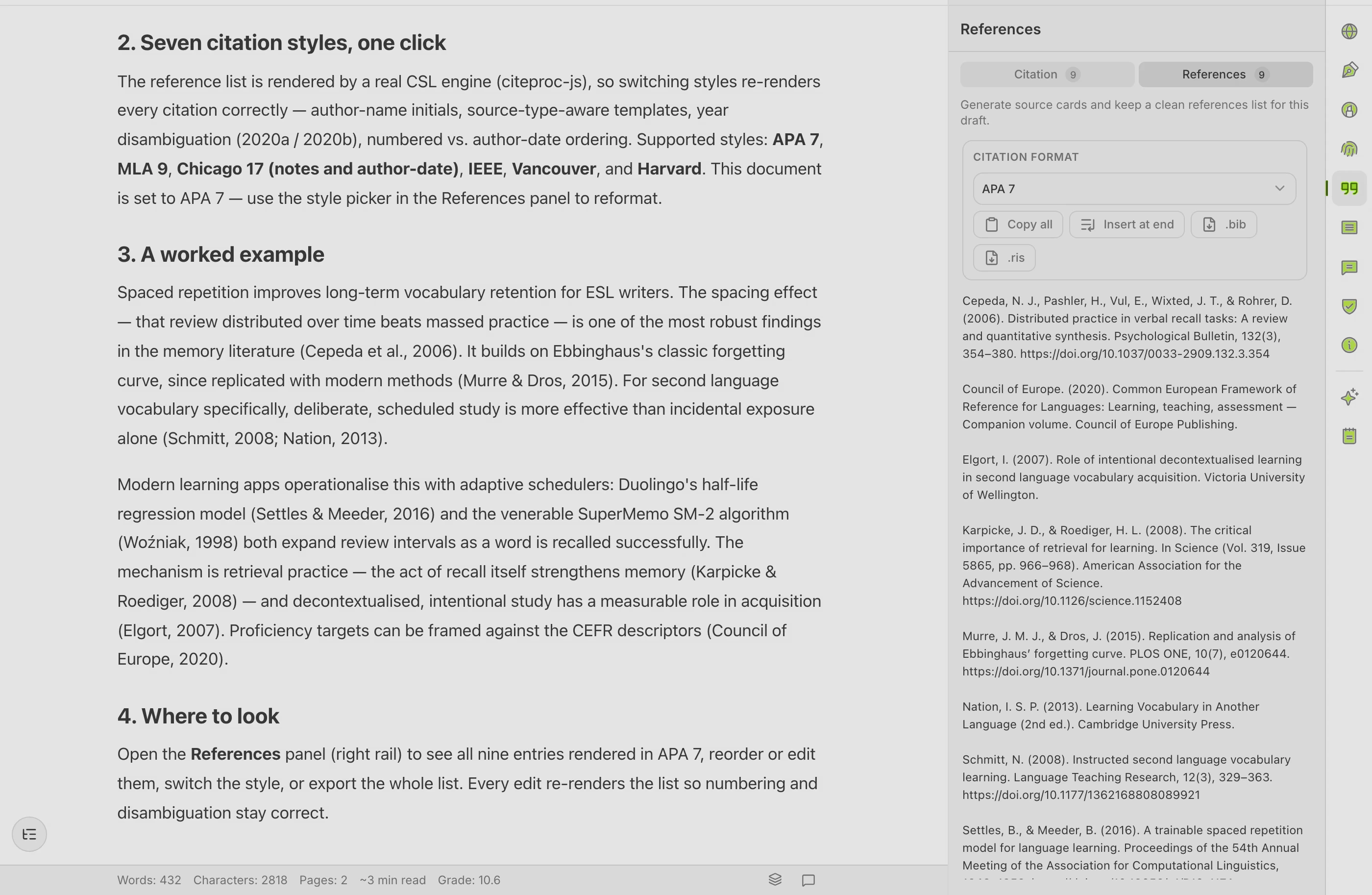
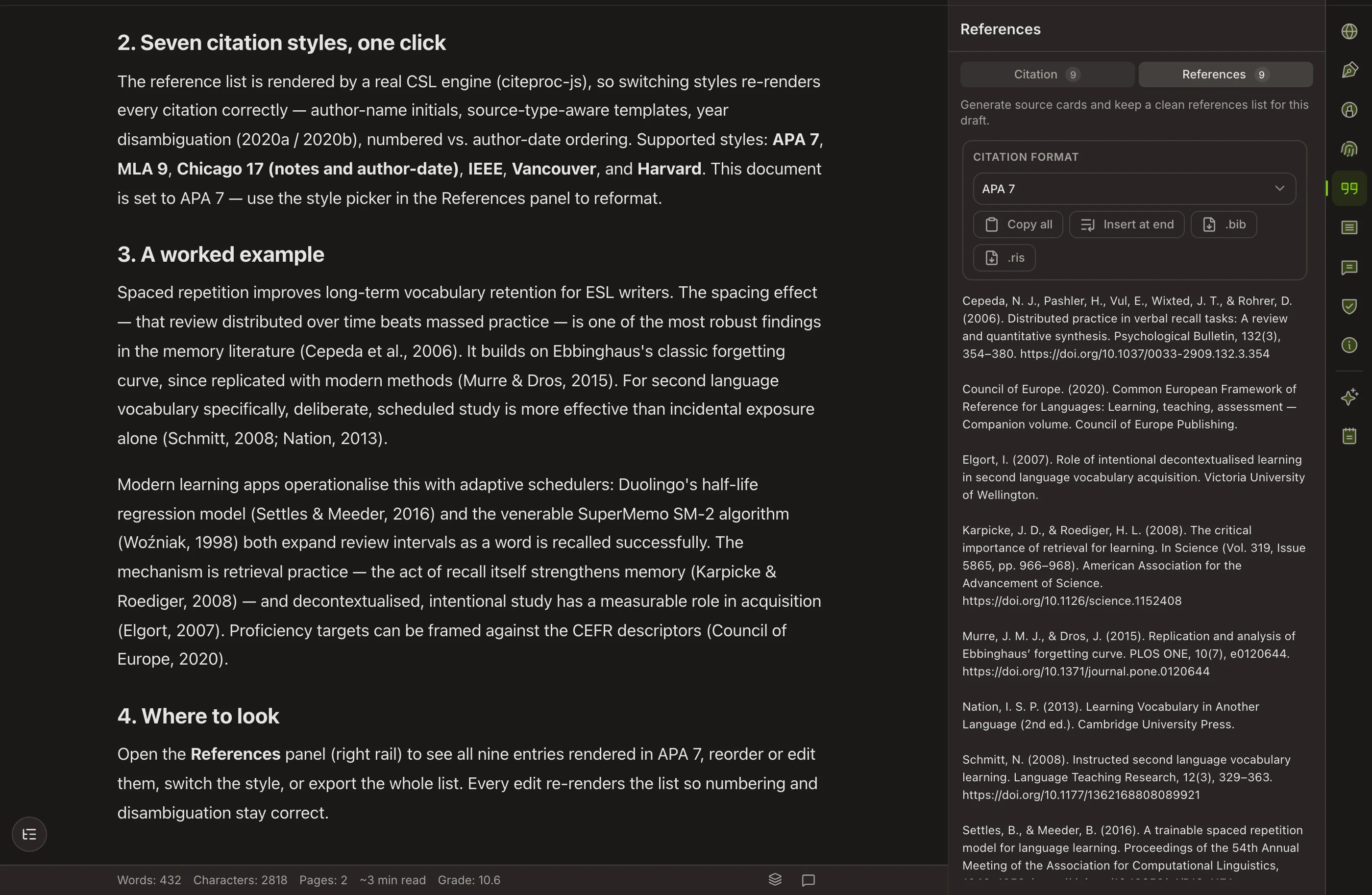
When you genuinely cannot reach the original — an untranslated dissertation, a source held in a closed archive — every major style provides a secondary citation. APA formats it as (Okonkwo, 2016, as cited in Hardin, 2019), lists only Hardin in the reference list, and expects this to be rare. Reviewers read a page full of “as cited in” as a sign that the reading was not done.