IEEE style
How to cite a website in IEEE style
Web pages often hide the author, the date, or both — and every style has a different rule for what to do when a required element simply does not exist.
THE FORMAT
A website in IEEE, at a glance
[#] A. B. Author. “Title of the page.” Name of the Site. Accessed: Mon. DD, YYYY. [Online]. Available: https://…
[4] N. Fairbanks. “How grid operators forecast the evening ramp.” National Grid Insights. Accessed: Mar. 4, 2025. [Online]. Available: https://www.gridinsights.org/evening-ramp
Evening-ramp forecasting is now almost entirely automated [4].
In prose: The operator’s own explainer [4] describes a two-stage forecast that reconciles a day-ahead model against a rolling four-hour update.
[5] “Interconnection queue reform: frequently asked questions.” Midwest System Operator. Accessed: Jan. 12, 2025. [Online]. Available: https://www.mwso.org/queue-reform-faq
In text: The operator’s own FAQ concedes a two-year backlog [5].
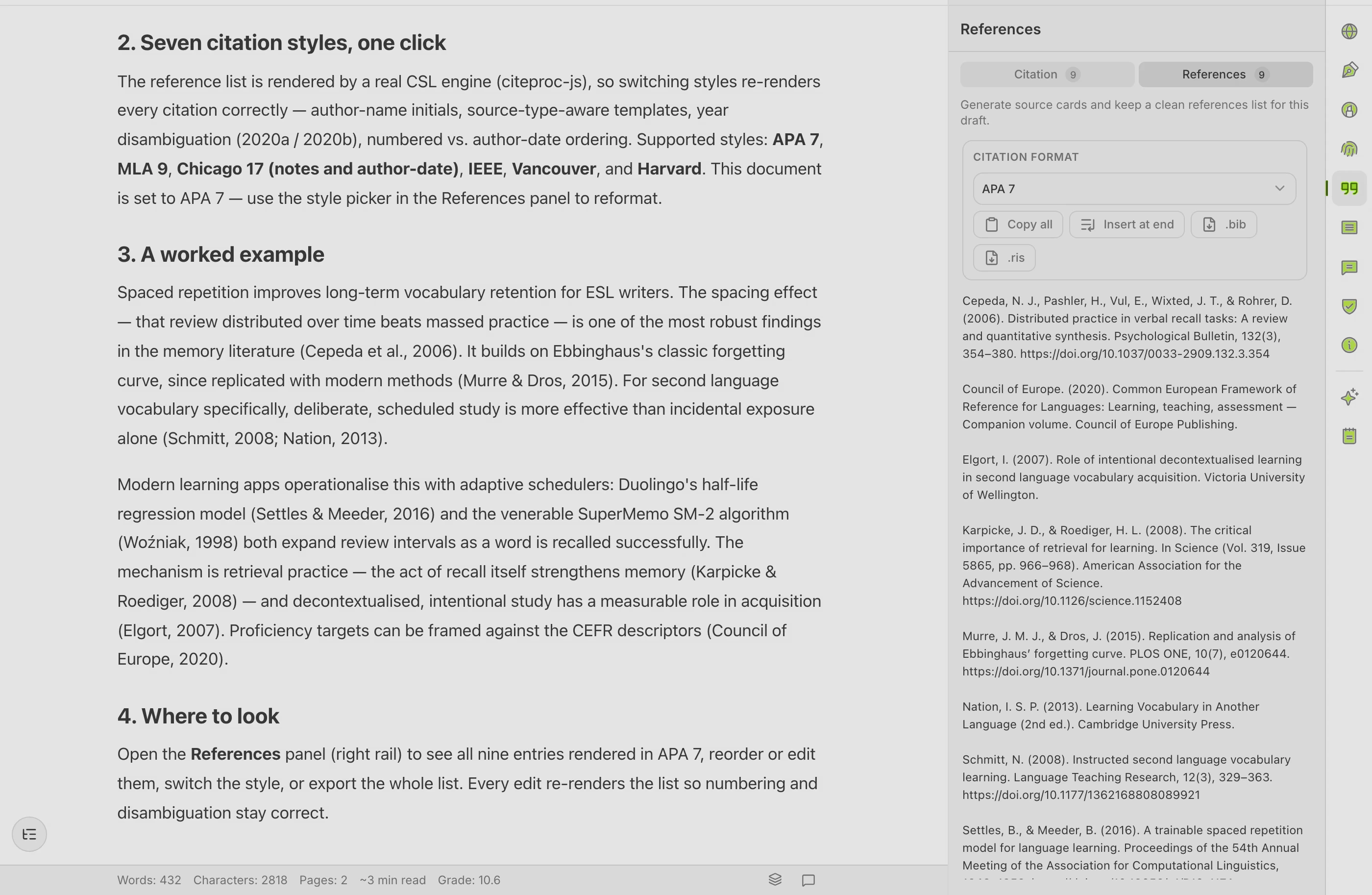
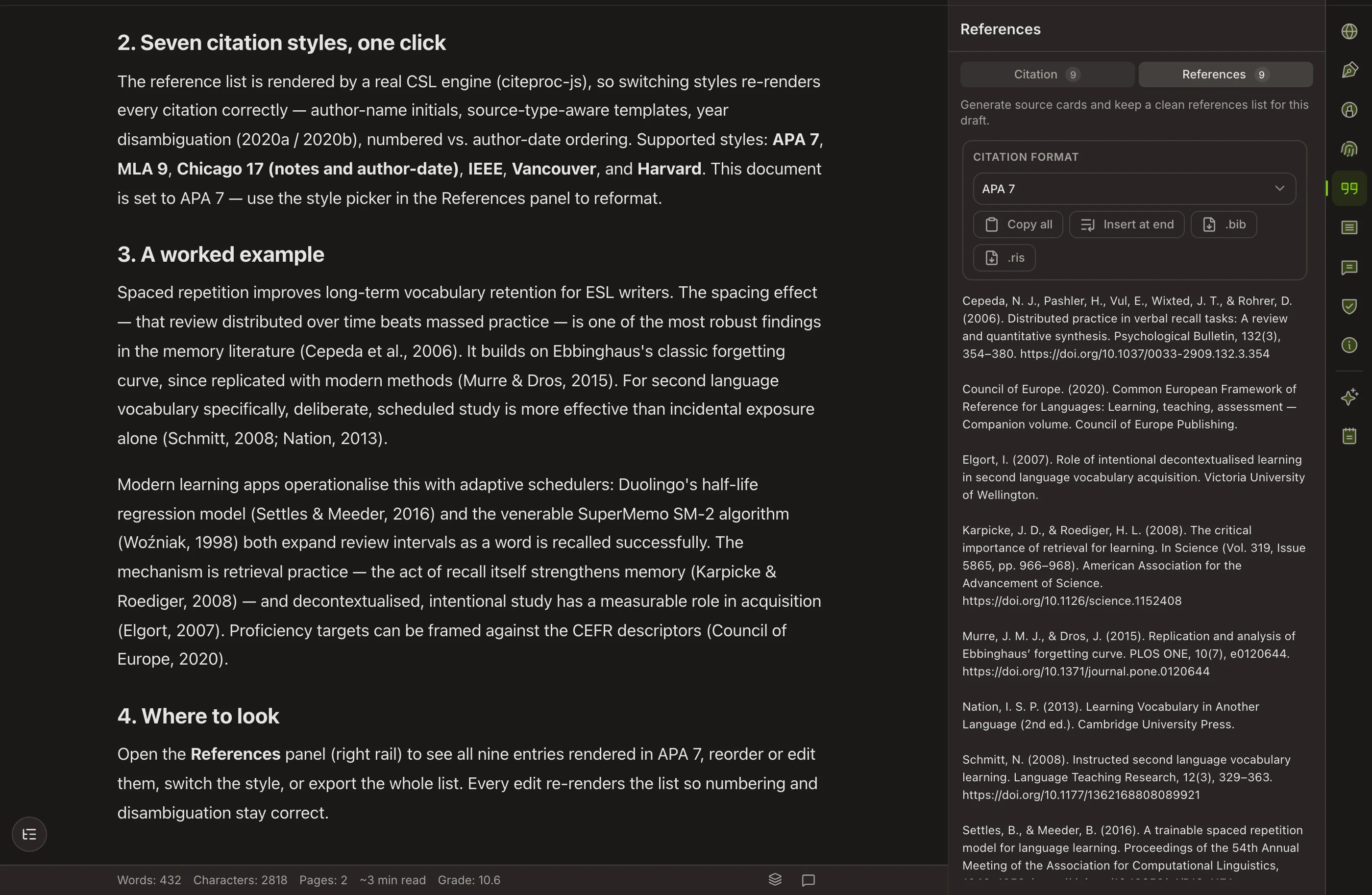
Copyeditor formats APA, MLA, Chicago and IEEE automatically — cite a source once and the references builds itself. See how citations work .
BEFORE YOU FORMAT
What IEEE needs from a website
Elements to collect
- Author — a person if one is credited, otherwise the organization
- Date of publication or last update
- Title of the specific page (not the whole site)
- Name of the website or publishing organization
- URL
- Date you accessed it, when the style requires one
Rules specific to this entry
- Online sources are the one IEEE pattern separated by periods rather than commas. Each element — author, page title, site name, access date — ends with a period, and “[Online]. Available:” closes the entry with the URL and no terminal period.
- When no person is credited, the organization takes the author slot. If the organization and the site are the same body, give it once rather than repeating it in both positions.
- The access date is mandatory precisely because a web page has no reliable publication date. IEEE’s current guide places it before the availability line; some older house templates put “(accessed Mar. 4, 2025)” at the very end. Follow whichever form your journal’s template shows and stay consistent across the list.
- Cite the specific page, not the site root. A URL that lands on a homepage forces the reader to search for what you claimed, which defeats the purpose of the entry.
Building the entry, step by step
Collect the details
Before you format anything, gather every element IEEE needs for a website: Author — a person if one is credited, otherwise the organization; Date of publication or last update; Title of the specific page (not the whole site); Name of the website or publishing organization.
Build the references entry
Arrange those details in the IEEE order: [#] A. B. Author. “Title of the page.” Name of the Site. Accessed: Mon. DD, YYYY. [Online]. Available: https://…
Add the in-text citation
In the body of your paper, cite it as Evening-ramp forecasting is now almost entirely automated [4]. — or work the same reference into your sentence as The operator’s own explainer [4] describes a two-stage forecast that reconciles a day-ahead model against a rolling four-hour update..
Check it against the exceptions
Online sources are the one IEEE pattern separated by periods rather than commas. Each element — author, page title, site name, access date — ends with a period, and “[Online]. Available:” closes the entry with the URL and no terminal period.
IEEE RULES
The conventions behind every IEEE entry
IEEE Reference Guide is the authority. Where a journal or department publishes its own house rules, those win — check your submission guidelines before the references is final.
The rules that apply across every source — author order, capitalization, how the references is sorted, and where IEEE entries most often go wrong — are collected on the IEEE style guide.
The same website in another style
Switching styles late in a draft is normal. Here is the same source formatted five other ways.
Questions about IEEE and websites
What if the website has no author?
Start the entry with the title and keep the number you already assigned it. A numeric references never re-sorts for a missing author, so the entry stays exactly where it is.
What do I need before I can cite a website?
Author — a person if one is credited, otherwise the organization, Date of publication or last update, Title of the specific page (not the whole site), and the rest of the elements listed above. Web pages often hide the author, the date, or both — and every style has a different rule for what to do when a required element simply does not exist.
Is there anything unusual about a website in IEEE?
Online sources are the one IEEE pattern separated by periods rather than commas. Each element — author, page title, site name, access date — ends with a period, and “[Online]. Available:” closes the entry with the URL and no terminal period.
What else catches people out here?
When no person is credited, the organization takes the author slot. If the organization and the site are the same body, give it once rather than repeating it in both positions.
Can I reformat this website in another style later?
By hand, you would retype the entry — the element order, punctuation and italics all differ between styles. In Copyeditor, sources are stored as structured data, so switching between APA, MLA, Chicago and IEEE reformats every citation and the whole reference list at once.
Cite it once
and never reformat it again
Copyeditor keeps sources as structured data, so switching between APA, MLA, Chicago and IEEE reformats every citation and the whole references at once.