Harvard referencing
How to cite a website in Harvard referencing
Web pages often hide the author, the date, or both — and every style has a different rule for what to do when a required element simply does not exist.
THE FORMAT
A website in Harvard, at a glance
Author or Organization (Year) Title of page. Available at: URL (Accessed: Day Month Year).
Northgate Institute for Public Health (2023) Air quality monitoring in school catchments. Available at: https://www.northgateinstitute.org/air-quality-schools (Accessed: 3 March 2024).
(Northgate Institute for Public Health, 2023)
In prose: The Northgate Institute for Public Health (2023) reports readings above the annual limit at eleven sites.
Northgate Institute for Public Health (no date) Our methodology. Available at: https://www.northgateinstitute.org/methodology (Accessed: 3 March 2024).
In text: (Northgate Institute for Public Health, no date) — guides that prefer the APA-style abbreviation would write (Northgate Institute for Public Health, n.d.).
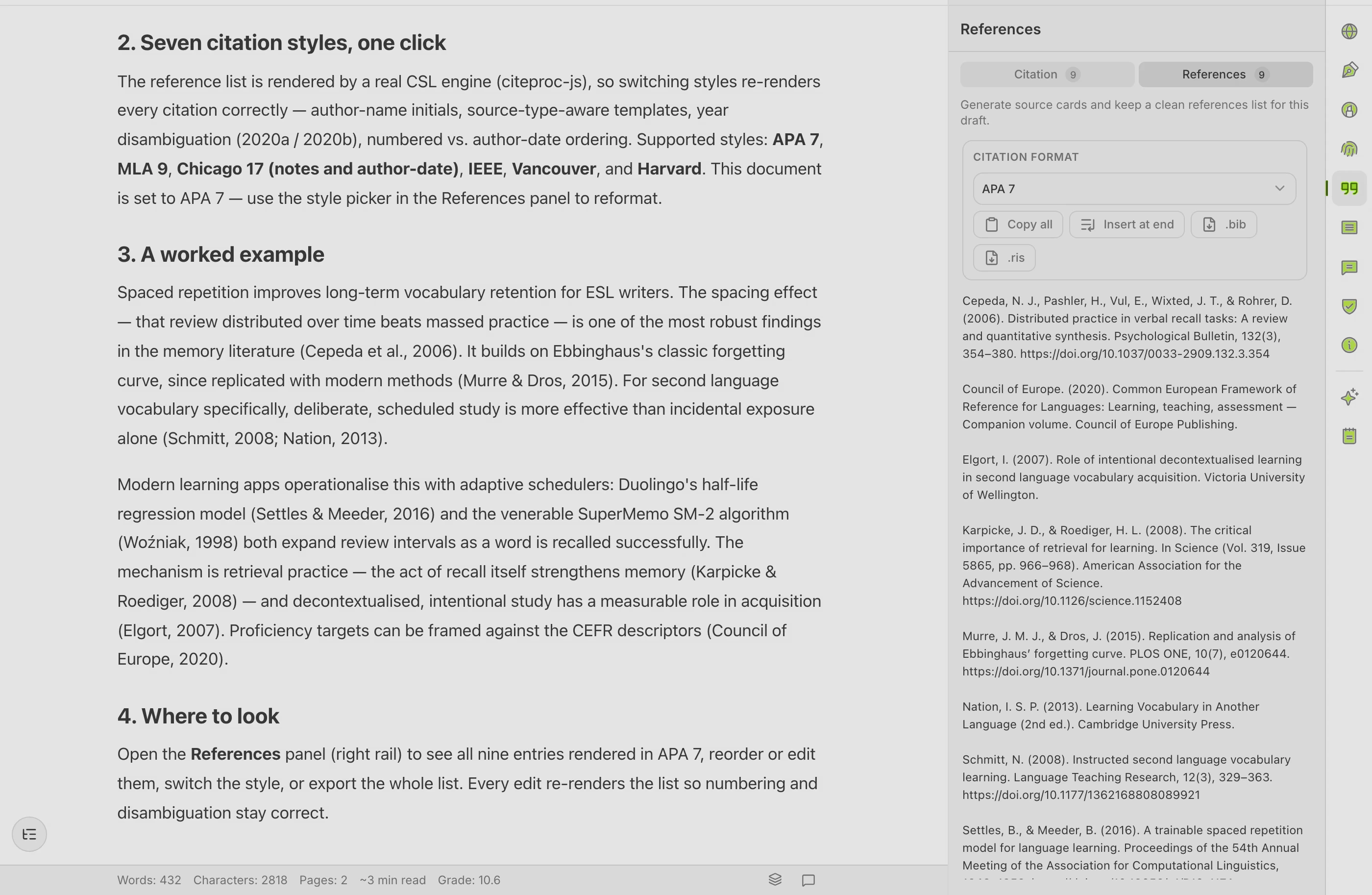
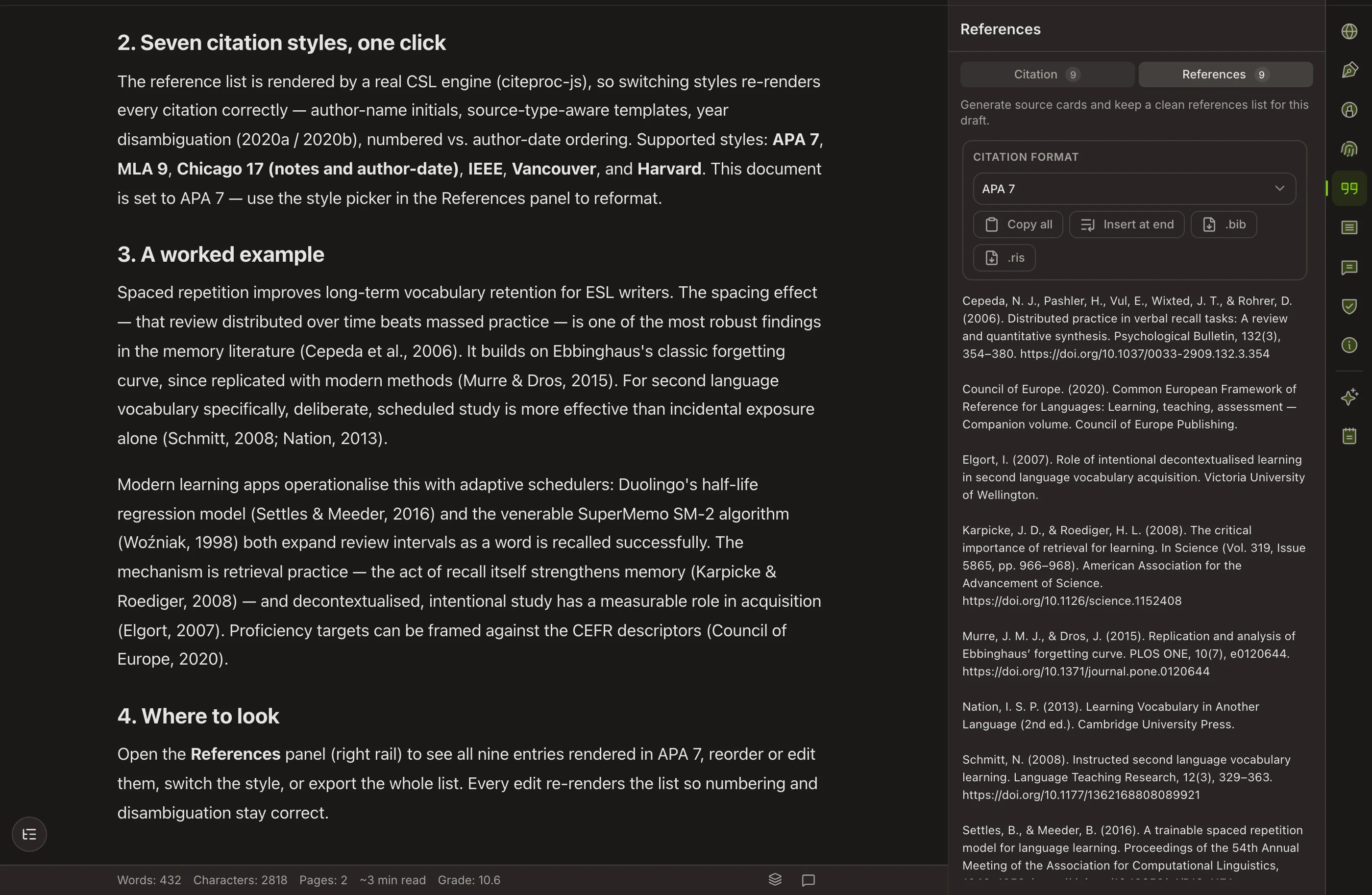
Copyeditor formats APA, MLA, Chicago and IEEE automatically — cite a source once and the reference list builds itself. See how citations work .
BEFORE YOU FORMAT
What Harvard needs from a website
Elements to collect
- Author — a person if one is credited, otherwise the organization
- Date of publication or last update
- Title of the specific page (not the whole site)
- Name of the website or publishing organization
- URL
- Date you accessed it, when the style requires one
Rules specific to this entry
- The page title is italicized here because the page is being treated as a work in its own right. Guides that treat a page as part of a larger site instead put the page title in quotation marks and italicize the site name. Both patterns are in circulation; follow yours.
- An access date on a web page is close to universal across Harvard guides, since web pages change without notice.
- A corporate author is written out in full at first mention. If you want to shorten it later, introduce the abbreviation at the first citation and use it consistently after that.
- The year in the author–date slot is the year the page was published or last updated — not the year you read it, which is what the access date records.
Building the entry, step by step
Collect the details
Before you format anything, gather every element Harvard needs for a website: Author — a person if one is credited, otherwise the organization; Date of publication or last update; Title of the specific page (not the whole site); Name of the website or publishing organization.
Build the reference list entry
Arrange those details in the Harvard order: Author or Organization (Year) Title of page. Available at: URL (Accessed: Day Month Year).
Add the in-text citation
In the body of your paper, cite it as (Northgate Institute for Public Health, 2023) — or work the same reference into your sentence as The Northgate Institute for Public Health (2023) reports readings above the annual limit at eleven sites..
Check it against the exceptions
The page title is italicized here because the page is being treated as a work in its own right. Guides that treat a page as part of a larger site instead put the page title in quotation marks and italicize the site name. Both patterns are in circulation; follow yours.
Harvard RULES
The conventions behind every Harvard entry
your institution’s Harvard style guide — Harvard has no single governing manual is the authority. Where a journal or department publishes its own house rules, those win — check your submission guidelines before the reference list is final.
The rules that apply across every source — author order, capitalization, how the reference list is sorted, and where Harvard entries most often go wrong — are collected on the Harvard referencing guide.
The same website in another style
Switching styles late in a draft is normal. Here is the same source formatted five other ways.
Questions about Harvard and websites
What if the website has no author?
Move the title into the author position and alphabetize by the first significant word of that title — ignoring an initial “A”, “An” or “The”. In the text, use a shortened form of the title where the author name would go.
What do I need before I can cite a website?
Author — a person if one is credited, otherwise the organization, Date of publication or last update, Title of the specific page (not the whole site), and the rest of the elements listed above. Web pages often hide the author, the date, or both — and every style has a different rule for what to do when a required element simply does not exist.
Is there anything unusual about a website in Harvard?
The page title is italicized here because the page is being treated as a work in its own right. Guides that treat a page as part of a larger site instead put the page title in quotation marks and italicize the site name. Both patterns are in circulation; follow yours.
What else catches people out here?
An access date on a web page is close to universal across Harvard guides, since web pages change without notice.
Can I reformat this website in another style later?
By hand, you would retype the entry — the element order, punctuation and italics all differ between styles. In Copyeditor, sources are stored as structured data, so switching between APA, MLA, Chicago and IEEE reformats every citation and the whole reference list at once.
Cite it once
and never reformat it again
Copyeditor keeps sources as structured data, so switching between APA, MLA, Chicago and IEEE reformats every citation and the whole reference list at once.