Vancouver style
How to cite a dataset in Vancouver style
Datasets have versions. Citing one without its version number or DOI makes your analysis impossible for anyone else to reproduce.
THE FORMAT
A dataset in Vancouver, at a glance
#. Creator AA, Creator BB. Title of the dataset [dataset on the Internet]. Version #.#. Place: Repository; Year [cited Year Mon DD]. Available from: DOI or URL
4. Nkemelu D, Lindgren M. Postoperative delirium screening cohort, 2019-2023 [dataset on the Internet]. Version 3.1. Oakland (CA): Dryad; 2024 [cited 2025 Mar 4]. Available from: https://doi.org/10.5061/dryad.8k2b1p4
All incidence estimates were recalculated from the released screening cohort.⁴
In prose: We recalculated incidence from the screening cohort released by Nkemelu and Lindgren,⁴ restricted to elective admissions.
5. Office for National Statistics. Hospital admissions by deprivation decile, England, 2023 [dataset on the Internet]. Newport (UK): ONS; 2024 [cited 2025 Mar 4]. Available from: https://www.ons.gov.uk/datasets/admissions-deprivation-2023
In text: Deprivation gradients were taken from the national admissions series.⁵
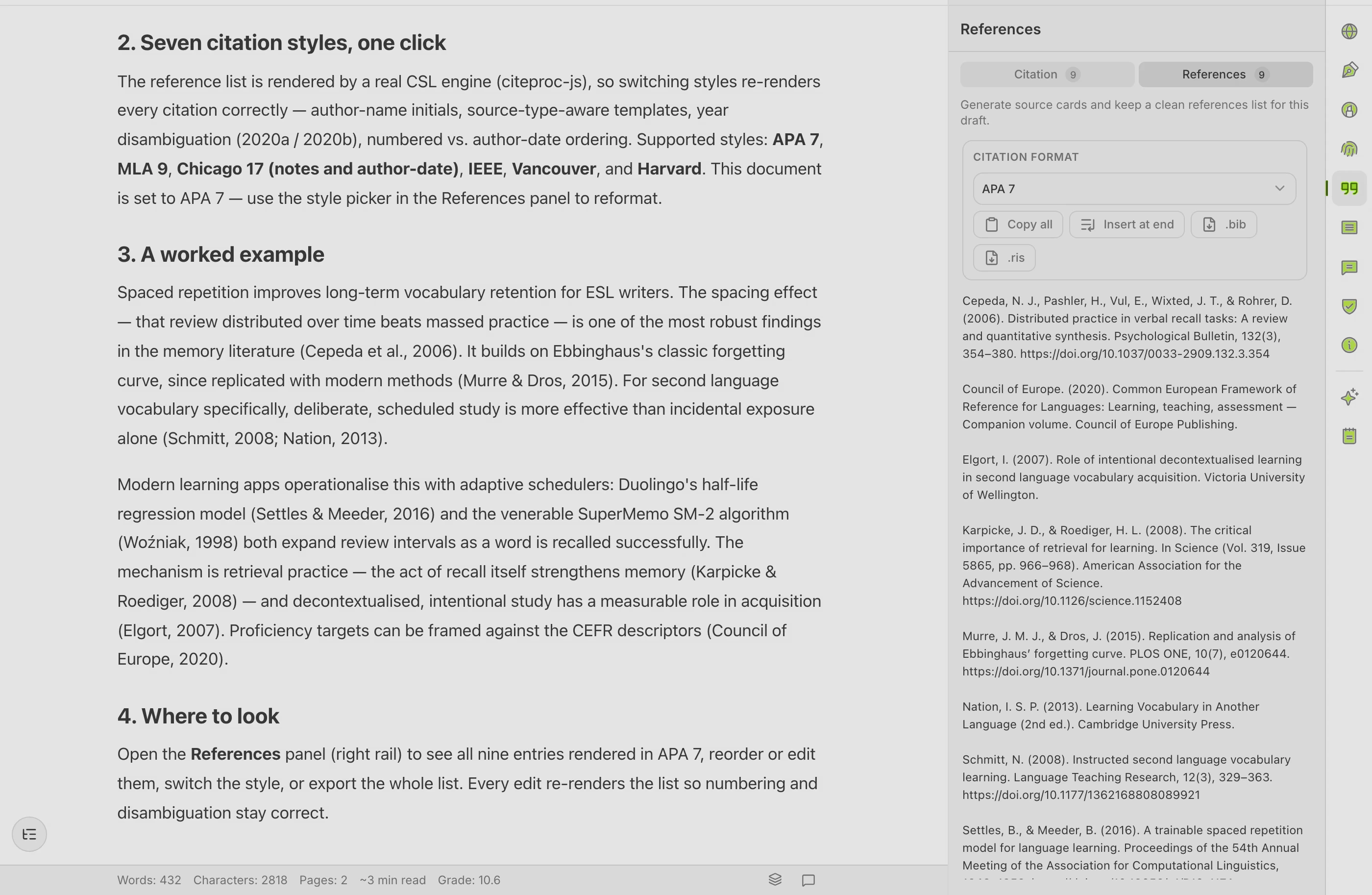
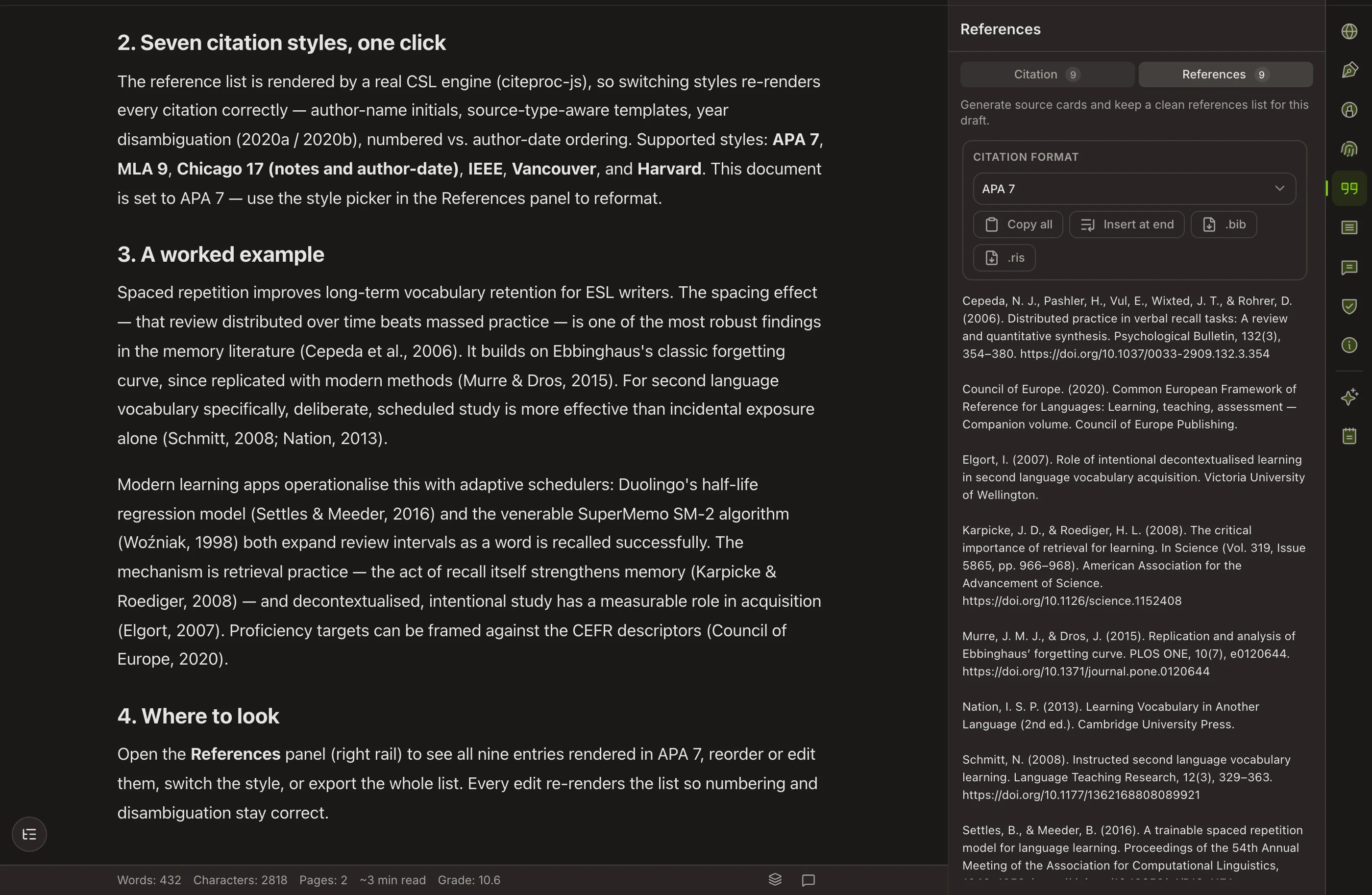
Copyeditor formats APA, MLA, Chicago and IEEE automatically — cite a source once and the references builds itself. See how citations work .
BEFORE YOU FORMAT
What Vancouver needs from a dataset
Elements to collect
- Creator or creators of the dataset
- Year the version you used was published
- Title of the dataset
- Version number
- Repository that hosts it
- DOI or persistent identifier
- Description of the format, when the style asks for one
Rules specific to this entry
- NLM writes US and Canadian places with the state or province abbreviated in parentheses — “Oakland (CA)”, “Bethesda (MD)”. The convention applies to every source type but is easiest to see on a dataset, where the repository location is the only place element.
- The version has its own element after the medium tag, and the DOI you cite should be the version DOI. A concept DOI silently resolves to the newest release, which makes your numbers unreproducible as soon as the authors publish an update.
- Citing Medicine covers databases and datasets on the Internet but predates current data-citation practice, so many journals now require a separate data-availability statement with its own template. Where that exists, it governs and the reference-list entry is secondary.
- A dataset behind an access agreement is still cited in full, with the access condition noted after the availability line. Never omit a dataset from the list because a reader would need permission to download it.
Building the entry, step by step
Collect the details
Before you format anything, gather every element Vancouver needs for a dataset: Creator or creators of the dataset; Year the version you used was published; Title of the dataset; Version number.
Build the references entry
Arrange those details in the Vancouver order: #. Creator AA, Creator BB. Title of the dataset [dataset on the Internet]. Version #.#. Place: Repository; Year [cited Year Mon DD]. Available from: DOI or URL
Add the in-text citation
In the body of your paper, cite it as All incidence estimates were recalculated from the released screening cohort.⁴ — or work the same reference into your sentence as We recalculated incidence from the screening cohort released by Nkemelu and Lindgren,⁴ restricted to elective admissions..
Check it against the exceptions
NLM writes US and Canadian places with the state or province abbreviated in parentheses — “Oakland (CA)”, “Bethesda (MD)”. The convention applies to every source type but is easiest to see on a dataset, where the repository location is the only place element.
Vancouver RULES
The conventions behind every Vancouver entry
Citing Medicine (NLM), 2nd ed. — the reference standard behind Vancouver is the authority. Where a journal or department publishes its own house rules, those win — check your submission guidelines before the references is final.
The rules that apply across every source — author order, capitalization, how the references is sorted, and where Vancouver entries most often go wrong — are collected on the Vancouver style guide.
The same dataset in another style
Switching styles late in a draft is normal. Here is the same source formatted five other ways.
Questions about Vancouver and datasets
What if the dataset has no author?
Start the entry with the title and keep the number you already assigned it. A numeric references never re-sorts for a missing author, so the entry stays exactly where it is.
What do I need before I can cite a dataset?
Creator or creators of the dataset, Year the version you used was published, Title of the dataset, and the rest of the elements listed above. Datasets have versions. Citing one without its version number or DOI makes your analysis impossible for anyone else to reproduce.
Is there anything unusual about a dataset in Vancouver?
NLM writes US and Canadian places with the state or province abbreviated in parentheses — “Oakland (CA)”, “Bethesda (MD)”. The convention applies to every source type but is easiest to see on a dataset, where the repository location is the only place element.
What else catches people out here?
The version has its own element after the medium tag, and the DOI you cite should be the version DOI. A concept DOI silently resolves to the newest release, which makes your numbers unreproducible as soon as the authors publish an update.
Can I reformat this dataset in another style later?
By hand, you would retype the entry — the element order, punctuation and italics all differ between styles. In Copyeditor, sources are stored as structured data, so switching between APA, MLA, Chicago and IEEE reformats every citation and the whole reference list at once.
Cite it once
and never reformat it again
Copyeditor keeps sources as structured data, so switching between APA, MLA, Chicago and IEEE reformats every citation and the whole references at once.